
Besides being one of the funniest men in the history of American comedy, DICK GREGORY (1932-2017) has been a groundbreaking black writer and an activist in Civil Rights, in politics, and in food and health issues. An activist vegetarian, he dedicated one  of his books to “America’s health-food stores, chiropractors, and naturopaths, and all others concerned with purifying the system.” Because of his efforts to purify many systems—bodily, social, political—he has often been dubbed a “fierce crusader” and a “drum major of justice and equality.” In 1968 he carried on a presidential campaign and became a write-in candidate as co-chair of the New Party. Among his classic comedy records are: Caught in the Act, The Light Side: The Dark Side, Live at the Village Gate, and Dick Gregory at Kent State. Among his books are: The Shadow That Scares Me (1968), No More Lies: The Myth and Reality of American History (1972), Dick Gregory’s Political Primer (1972), and A Callus on My Soul (2000), and perhaps most famously his autobiography Nigger! (1964)—which bears the famous dedication: “Dear Momma—Wherever you are, if ever you hear the word ‘nigger’ again, remember they are advertising my book.” It also contains a transcription of one of his classic bits: Informed by a waitress in the South that they don’t serve colored people, he says, “That’s all right. I don’t eat colored people. Bring me a whole fried chicken.” In walk three cousins—Klu, Kluck, and Klan—who say they’re going to do to him anything he does to that chicken. Gregory picks it up and kisses it.
Twenty years ago I brought him to my college (North Central College). He was so famous as a radical crusader that I asked him on the way in from the airport if he was still doing standup. He seemed ticked off, saying, “What do you mean? I’m still one of the funniest cats out there,” then proceeded to preface the crusading speech he gave that night with 45 minutes of standup that had us roaring, doubled over.
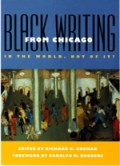 His home base being Chicago, it seemed natural to me to include him when I put together my book Black Writing from Chicago many years after that hilarious, fiery night. The excerpt came from Chapter 4 of his autobiography and detailed the months just before his big showbiz break, months also filled with growing insights into race and comedy. Great comedy always goes hand in hand with great social change. FDR had Will Rogers. Martin Luther King, Jr. had Moms Mabley and others, and the changing fortunes of the Civil Rights Movement as it clashed with the Black Power Movement spawned some of America’s greatest comic geniuses, in particular Richard Pryor and Dick Gregory himself. Comedy remains one of the major ways we approach race in America, but the approach is paradoxical and hard to fine tune. In the excerpt I used for Black Writing from Chicago, Gregory tells how he discovers he has to both play on white guilt over racism and relieve it at the same time, make its absurdities real but also…absurd, funny. The balance he hit would set comedic standards for years to come and make us face racism squarely and deeply, something we need to do today as much as we did in the 60’s and 70’s.
√ Go to a list of Black Writers written about on this site, OR the Teaching Diversity main page.