Daybreak Video

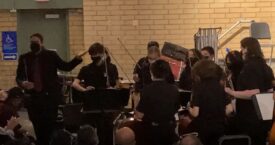
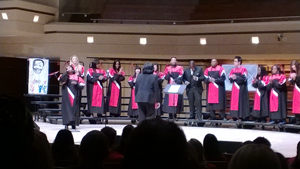
Daybreak Homeless Shelter in Joliet, IllinoisThe video below shows a few who have come to the Daybreak homeless shelter in Joliet, Illinois, to cook, serve, and be with the shelter’s residents.  For over 15 years I have coordinated volunteers—mainly from Friendship United Methodist Church—who come on the third Friday and Saturday of every month.

Go here for THE YEAR’S SCHEDULE and feel free to join us.

In 1988, distinguished homeless advocate DIANE NILAN started a shelter that grew into today’s Daybreak.  Today Diane is president and founder of HEAR US, a national advocacy group focused on bringing voice and visibility to homeless children, youth, and their mothers.  We’ve worked with her for over 25 years, and my wife Linda Bonifas is on the Hear Us board of directors.

Please read about Diane Nilan and Hear Us, and learn more about America’s plague of homelessness, which has worsened because of structural inequalities of wealth, education, and opportunity.  See links at the end of the Hear Us main page on this site to learn more about these inequalities.  You can also learn about Chicago Family Directions—a project started in one of my classes—dedicated to tutoring and mentoring homeless and other disadvantaged youth.  Emmanuel House—founded by my oldest son Rick and his wife Desiree as a living memorial to Rick’s youngest brother Bryan Emmanuel—also deals with housing issues and inequality.  In 2016 it was named one of the “Top 100 Most Innovative” social change organizations in the world.

You can get involved in helping to end homelessness.  In the richest country in the world, 1.5 million kids are homeless.  The average age of a homeless American is under 10.

_______________________________________
Video music by Dan Guzman. Hear more of Dan’s music
on This Site or our YouTube channel.

  Watch Rick Guzman, Dan’s oldest brother, talk about how he got into working to help the poor, how there are assets even in poor communities that can help lift them out of poverty, and how he was present when a call came from Nelson Mandela.  Even better is his talk “Every Person’s God Given Ability to Contribute.”

Read more about our Daybreak Team and follow links in this article to learn more about Daybreak’s founder, Diane Nilan, and our nation’s growing Wealth Gap crisis.

Watch a video about Feed My Starving Children.

Posted in Music & Media Podcasts, Social Change | Tagged , , , , , | Leave a comment

Daybreak Shelter Service Schedule

Daybreak Homeless Shelter in Joliet, IllinoisJoin me and other volunteers—mainly from Friendship United Methodist Church—as we prepare food, serve it, and speak with shelter residents at Daybreak on the third Friday and Saturday of each month in Joliet, Illinois.  I’ve coordinated this program for many years.  Watch a VIDEO of some of our times at Daybreak.  You can learn more and find related links in the post accompanying the video.

One of the greatest things parents can give their children is a passion and vision for serving, and bringing the whole family to Daybreak is a great way to start.

My own children started with me when they were well under ten. In a newspaper article my oldest—Rick Guzman—credits this early experience with beginning a passion for solving housing problems that continues in big ways today.  It’s at the center of his career.

Read that article (“Seeds of Change“) and see below for other resources.  In 2016 Emmanuel House, an organization devoted to housing issues, was named one of the “Top 100 Most Innovative” social change organizations in the world.  Rick and his wife Desiree started it as a living memorial to his youngest brother Bryan Emmanuel Guzman.  In 2023 Rick received the Emerging Leader Award from the national Neighbor Works Network, and in 2024 The Neighbor Project, for which he serves as executive director, received a $2 million gift from MacKenzie Scott’s Yield Giving organization.

2026 Schedule

January 16-17
February 20-21
March 20-21
April 17-18
May 15-16
June 19-20
July 17-18
August 15 and 21*
September 18-19
October 16-17
November 20-21
December 18-19

Service times:
5:30 p.m. to 8:00 p.m. for Friday dinner.
5:00 A.M. to 7:00 a.m. for Saturday breakfast.

Address: 611 Cass St. (Route 30), Joliet, IL

* Note: Our service times are usually consecutive Fridays and Saturdays. However, when the 1st of the month falls on a Saturday—as it does one to three times a year—our days split. We serve an early-Saturday breakfast first, then Friday dinner the following week.

____________________

  Contact me, Richard R. Guzman, if you’d like to help.

  Learn more about homelessness and our work with advocate Diane Nilan HEREIn 1988 she started what became the Daybreak Shelter.

  Go to the main pages for Emmanuel House and for Chicago Family Directions, two organizations that also help with housing and education.

  See a video about Feed My Starving Children, another organization helping to feed the hungry.

Posted in Social Change | Tagged , , , , | Leave a comment

Welcome to the International Hotel – Part 2

This is Part 2 of the first draft of the beginning of a chapter in one of my book projects: this one on the various fates of radicalism in the U.S.  Three short stories, each followed by an essay deconstructing them.  This essay follows a story—the book’s first chapter—loosely based on my uncles Felix and Paul.  Besides their stories—and mine—it speaks a lot about the famous struggle to save San Francisco’s International Hotel in the late ’70’s, a struggle some have put on the level of the Delano grape boycotts.  It will make a lot more sense if you READ PART 1 of this essay first!


In 1968 I was a student at the University of California, Berkeley, when my brother Joe, also a student there, called me.  “I think we may have found Uncle Felix,” he said.  “He may be at the International Hotel.”

Crossing the Bay to check, I found the hotel lobby had been turned into a kind of military check point, and I asked a long-haired, young Filipino man seated at a table blocking entrance to the lobby whether he knew if Felix Ayson was living there.  “Who wants to know?” he said, suspiciously.  “Well, I’m kind of his nephew,” I said.  At this he slowly said, “Felix Ayson,” leaning his chair back, his face now softened by what seemed a sudden nostalgia.  “Felix Ayson,” he repeated.  “The greatest Communist theoretician our people has ever known.”

“Uncle Felix?” I said, my eyes bugging out.  I tried to square the memory of a little man tinkering with radios in his basement with what I had just heard.  I always saw Uncle Felix as kindness and gentleness personified.  “Now, Ricky, how are you doing in school?”  That was his standard greeting.  But he was so meek that he seemed to disappear.  What was most interesting to me about him was his cat Elicio, an enormous tabby, and his wife, Aunt Etta, a Louisiana Creole seemingly twice his size.  “Ricky!  Ricky!” she always bellowed, throwing her big arms open to hug me when my family came over.  We always spent Thanksgiving with them, and many ordinary dinners, too, enjoying Aunt Etta’s extraordinary cooking.  I remember watching her amble around the kitchen, her half-calf hose sagging down, her jaw muscles flexing and tensing with each stir of a dark stew or gravy, with each pinch of spice she threw in like darts.  Her relatives, especially her nephew Calvin, seemed the most urbane man in the universe.  Soft spoken and articulate, he was always impeccably groomed, his suits crisp, his wavy dark hair neatly slicked back, a tinge of coffee color glowing just underneath his light skin, hinting at the black part of his heritage.

Felix Ayson tribute and obituary in The Worker

Felix Ayson, Revolutionary. A tribute in The Worker.

When they took me up to Uncle Felix’s room at the International Hotel—there he was!   Much thinner now, his eyes were still kind and bright above the same warm smile I remembered, only now he had a Fu-Manchu mustache.  He had another cat, too, a thinner, scragglier version of Elicio.  And now he lectured me enthusiastically.  “Now, Ricky, you know that eventually the proletariat will triumph, don’t you?”  He held his right index finger straight up in a gesture I didn’t recognize, and his head rested against the backdrop of a shelf of books, many of which I did recognize, like The Marx-Engels Reader.

A few years later I received a large manila envelope of his personal effects, including his wallet.  I don’t know now who sent it to me. On the other side of the business card printed in Chinese was this:

 EVERYBODY’S BOOKSTORE   (781-4989)

ASIAN COMMUNITY CENTER  (397-0629)

* Workers Committee to fight for the International Hotel &

VictoryBuilding

*Chinatown Tenants Organizing Committee

*The Worker Newspaper

*Garment Workers Organized (Section of Bay Area

United Workers Organization)

17 Brenham Place

Portsmouth Square

San Francisco, CA  94108

(New Temporary Location)

Not only was Uncle Felix living at the International Hotel, he was leading the protest.

____________________

 At least Felix Ayson was the most prominent face of the cause.  I have drawn several elements of my summary of I-Hotel incidents from Estella Habal’s wonderful book San Francisco’s International Hotel: Mobilizing the Filipino American Community in the Anti-Eviction Movement, a movement in which she played a significant role.  The book contains a detailed chronology and a thorough accounting of the role of many other leaders—Emil de Guzman, Jeannette Lazam, Al Robles, Bill Sorro, Frank Alarcon, So Chung, Luisa de la Cruz, Joe Diones, Claudio Domingo, “Tex” Llamera, Nita Rader, Joe Regadio, Frankie de los Reyes, Wahat Tompao….  Another was a young Filipino student at Berkeley, Bruce Occena.

In early January 1969 Berkeley’s African-American Student Union (AASU), the Mexican-American Student Confederation (MASC), and the Asian-American Political Alliance (AAPA) began acting together as the Third World Liberation Front (TWLF).  On January 22nd the TWLF called for a strike against the university, placing pickets at every major entrance.  Among its demands was the establishment of a Third World College.  Pressure for this and other ways to honor and incorporate minorities into the university had been building for a long time.  In October 1968, for example, when Governor Reagan had denounced the Delano Grape Boycott and university officials had ordered the resumption of serving of grapes in the dormitories, eleven members of MASC were arrested when they tried to meet with Berkeley president Charles J. Hitch.

I don’t know how or why he found me, but suddenly Bruce Occena was at my side.  “I know you can’t afford to be arrested,” he said.  “But work with us and I’ll protect you.  I’ll go to jail for you.”  It struck me as such a Christ-like gesture, and before long I, as a snot-nosed sophomore, was working to construct guidelines for courses on Southeast Asia to be taught in the Third World College we somehow knew we would get.  I worked with another Filipino, Nilo Sarmiento, a Jesuit priest working on a Ph.D. in Hindi-Urdu.  “It’s easy.  Just chicken scratch,” he said to me as I peered in wonder at the manuscripts he was studying.  Meanwhile violence flared almost from the beginning of the TWLF strike.  By late January/early February police were arresting picketers right and left and all rallies were labeled “illegal assemblies.”  On February 19th police used mace for the first time.  On February 20th they used tear gas to quell increasingly violent clashes with protesters.  On February 27th, Reagan ordered the National Guard to the campus.  One afternoon, the National Guard chased a group of us inside a campus library, barring the inside door and lobbing tear gas into the foyer to keep us locked in place.  Out of this cauldron Occena came to work at the International Hotel, directing many aspects of I-Hotel work as member of the KDP’s National Executive Board.  Habal describes him as developing “Marxist-Leninist politics” while in Cuba.

Another name in the saga is “Etta.”

At first I did double and triple takes, thinking this name couldn’t be referring to Aunt Etta.  It didn’t.  It referred to Etta Moon Chung, another I-Hotel resident and leader.  In Habal’s book Aunt Etta’s existence is only acknowledged with 19 words and one date in two sentences.   “That same year Felix married a Creole woman from New Orleans.”  And: “His wife died in an automobile accident in 1964.”   In fact, all the people I talked to about Uncle Felix post-1964 or so said they had never heard of Aunt Etta.  Habal’s background sketch of his life omits virtually the whole time I knew him as a child but recounts him enacting an almost mythic path travelled by many first-generation Filipino men in the U.S., including my Father, Jose E. Guzman.  Dreams of an education and a profession versus the reality of menial jobs and the itinerant lifestyles following those jobs; working in the fields, sometimes attempting to organize farm workers; U.S. army as savior and path to citizenship; some education, perhaps on the GI bill, but rarely rising, despite it all, above the menial.

I was surprised to learn of Uncle Felix’s long-term tie to the International Hotel.  He moved back to it permanently in 1969, but had been living there intermittently since 1926, his longest time away being the time I knew him as a child, when no shadow of organizing or socialist thinking ever seemed to cross his mind.  He seemed absolutely content then, his radical days a distant lifetime away.  The International Hotel reawakened that former life.  He was the I-Hotel’s poster child all right, and not just in papers and government reports.  Rachel Romero’s stunning black and white etchings and posters show Uncle Felix as the Ur-Socialist soldier standing up against and smashing the capitalist machine, or the gentle, mustachioed revolutionary with landscapes of words about freedom and justice flowing behind and around him.  He was also much more than a poster child.  Always mentioned is his striking authority, his rapport with youth.  He took the lead in opposing the Moscone plan, sniffing out implications that would have put I-Hotel tenants in untenable positions.  Nor was he intimidated by Judge Ira Brown.  “Why should he talk like that?” he said.  “We are citizens…Four Seas shouldn’t be here in the first place.”

"Felix Ayson" by Rachel Romero

 ____________________

Pablo Ayson, Felix’s brother, traveled another path.

A merchant marine for twenty years, he later settled in the small California valley town of Terra Bella, where so many from my village in the Philippines settled that it was widely known as Little San Esteban.  Yet the trail of facts about Uncle Paul’s life has pretty much gone cold.  At his death I received no envelope of personal effects as I had from Uncle Felix—or whomever it was decided I should have them.  I only have sharply etched memories.  Pablo, whom I always called Uncle Paul, was definitely the craziest of my uncles, a man who told me dirty jokes as we picked leaves off grapevines in preparation for picking the grapes themselves when I was just 12 or 13.  Years later, my first wife and I spent our first anniversary travelling the long, dusty way from the Bay Area to Terra Bella for a Filipino celebration neither of us wanted to attend.  We were considering moving into a duplex from our tiny one-bedroom apartment, and I had said we were $200 short.  Soon after we arrived, tired and morose, Uncle Paul came up to me, said, “Sorry I missed your wedding,” and handed me an envelope.  Inside were two $100 bills.

About Uncle Paul’s paramour I know even less, though all my relatives’ murmuring about her told me pretty certainly that she was a prostitute.  Still, they were “together” for thirty years.  I never knew her name, though I have taken to calling her Vivian, and I remember seeing her only once.  “There’s your Auntie,” Paul said to me, nodding over his shoulder at her on the other side of a big lunch room slouching against a wall with the other prostitutes.

That summer I worked for Johnny Cemo just outside Porterville, California, picking grapes on a team composed mainly of relatives.  We got $1.00 an hour, plus ten cents a box.  We needed to work fast because the men made about half their yearly salary during the three months of working grapes.  It was a sacrifice for them to take on an inexperienced youngster who would slow them down, at least at first, and I spent most of the beginning days huffing boxes of grapes, one on each shoulder, down deeply furrowed earth to the waiting trucks.   I struggled to keep my ankles from buckling this way and that on the soft ground, feeling I wouldn’t be able to take more than a step without falling over.  But I never did fall.  Slowly, they taught me how to trim a bunch of grapes by cutting one out here, another there, so they weren’t packed so tightly and the bunch would hang down more loosely, more beautifully, before being placed just so in one of those  classic wood grape boxes I’ve seen sold for big money in antique stores.  I got good at it, and fast, but always remained the team’s main carrier.

I don’t think the two couples ever met.  I would like to imagine Paul and Vivian and Felix and Etta together, but can’t, not even to write a piece of fiction.  I can, however, imagine Vivian and Felix meeting.  I can imagine them in bed.

Felix Ayson being escorted from the International Hotel by "weeping supporters"

Felix Ayson being escorted from the International Hotel by “weeping supporters.” This large picture was in the August 7, 1977, SF Chronicle.

Read PART 1 of this draft.

A draft of another part of this book project is “The Accidental Radical,” also on this site.

  Go HERE for a list of all writings on the Philippines.


Posted in Family, Social Change | Tagged , , , , , , | Leave a comment