
Basie, KC, and Swing

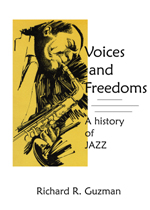
The Video/Audio below is an excerpt from the 9th show of my radio series Voices and Freedoms: A History of Jazz, based on my 1976 book of the same name.  The episode is about Swing, the style and era when jazz dominated the American musical scene. One of the most important musicians of that era was William “Count” Basie. The 16-part series played across the nation for five years in the late 70’s/early 80’ and holds its relevance—or is even more so—today than it was back then. The excerpts present about 6 to 10 minutes of the original 30-minute broadcasts. The link above takes you to information about the book and our plans to re-release it and provide access to the full-length original shows. Go HERE for a complete list of shows and links to all excerpts.


Though jazz entered the American musical mainstream in the 1920’s, in the decade between 1935 and 1945 it came to dominate American music.  It was sold coast to coast as Swing Music, and it followed a familiar pattern: the White groups that popularized the music—the Goodman Band, the Glenn Miller Orchestra, the Dorsey Brothers, etc.—were outrageously popular and made most of the money. Even as stellar a Black band as Duke Ellington’s made about half the money of popular White bands.  Of course, this story of cultural appropriation and money-making pre-dated Swing and continues through Rock ‘n’ Roll and beyond to today and into the foreseeable future.

Black bands which had created the music were playing it in the early 30’s, even the late 20’s. Duke Ellington and Irving Mills wrote their hit “It Don’t Mean a Thing If It Ain’t Got that Swing” in 1932. Chick Webb, Bennie Moten, Earl Hines, Louis Russell—these were among the many Black bands playing Swing early, and the leader in the movement was Fletcher Henderson, whose band started a historic re-engagement at New York’s Roseland Ballroom in October 1924.

The excerpt below discusses the main ideas, band divisions, and musical structure of Swing before playing a 1932 Henderson classic, “Wrapping It Up.”  It spends more time with one of the most influential jazz musicians of all time, Count Basic, whose big band is one of the most seminal in jazz history, employing the likes of Walter Page, Joe Jones, and Lester Young.  In the full show I spend a lot of time talking about Basie’s first big hit, the wonderful “One O’Clock Jump.”  In the excerpt below we bring it up at the end of Basie’s opening piano solo and play only Lester Young’s full solo, a solo built on spontaneous reaction to the last few notes of the preceding trombone solo, and backed inventively by the drumming of Joe Jones. The excerpt ends with the last seconds of “One O’Clock Jump,” just giving you a taste of some of the most inspired contrapuntal riffing in jazz history.

Kansas City played a big part in Basie’s career.  He was stranded there when a traveling show he had joined, Donzel White and His Big Jamboree Review, ran out of money.  “In jazz history” is a phrase we use a lot describing Basie’s music and career, and this was the most productive piece of hard luck “in jazz history.”  Kansas City was home to some of the best Swing bands in the country, including Bennie Moten’s, for whom Basie played piano before forming his own band, many of whom were Moten alumni.  On the edge of the Southwest, Kansas City had that Southwest feeling of openness which I believe played a part in creating a more open musical structure.  It was also closer to the South, and therefore closer to the culture and sound of the Blues, plus the more Southern jazz tradition which gave prominence to the soloist.

Basie seemed to give it all over to his soloists, and some initially reacted poorly to his music.  While someone like Ellington created a highly textured, highly orchestrated blend of voices. Basie seemed to give everything to the soloists, and some initially thought of his Swing pieces as nothing more than a string of solos with minimal ensemble involvement.  But listening to “One O’Clock Jump” reveals a highly integrated whole with soloist and band in an exciting give and take, the best give and take in all of Swing.  Jazz, at heart, may be a soloists art, and it seems definitely most at home the closer it is to Blues form, attitude, and voice.  Basie had his musical cake and ate it too by bringing the soloist and Blues voice into the big band, Swing format.

Go to the Diversity Training and Teaching page on this site.

Posted in Jazz History, Music & Meaning, Music & Media Podcasts | Tagged , , , , , | Leave a comment

Duke Ellington: My People

The Video/Audio below is an excerpt from the 8th show of my radio series Voices and Freedoms: A History of Jazz, based on my 1976 book of the same name.  The episode is about Duke Ellington. The 16-part series played across the nation for five years in the late 70’s/early 80’ and holds its relevance—or is even more so—today than it was back then.  This is perhaps especially the case with Ellington because of his dedication to his people and the Black experience in America.  The excerpts present about 6 to 10 minutes of the original 30-minute broadcasts. The link above takes you to information about the book and our plans to re-release it and provide access to the full-length original shows. Go HERE for a complete list of shows and links to all excerpts.


Elegance radiated from Edward Kennedy Ellington from an early age, so though he had many nicknames—Cutie, Wucker, Dumpy—the one that stuck, naturally, was Duke.  Ellington, Elegance, Eloquence: in meaning and sound these words are virtually synonymous. He was also more concerned with voices than anyone in jazz history: the voices of individual instrumentalists, and the voices of his people.

He wrote over 2000 compositions, and his concern for instrumental voices led him to virtually double jazz’s tone palate and open up new ways to think about arranging and voicing jazz compositions.  As much as anyone, he brought jazz into the American mainstream, yet his devotion to his people and Black culture stands as one of the fiercest, proudest signals meaning as much, if not more, today than ever. As one critic put it, “…at times he and his orchestra developed and maintained almost singlehandedly a Black cultural tradition.”

The excerpt below highlights first his concern with those instrumental voices, then jumps to near the end of the full-length, original show to highlight Ellington himself speaking about the importance of his people in American history.  What’s left out are long sections of several important works which illustrate his growth as a composer and arranger.  I spend some time, for example, with the piece “Concerto for Cootie,” which is the basis for one of his jazz/pop hits “Do Nothing Till You Hear from Me.”  That range from concerto to pop song symbolizes the range of his music.  Well in advance of the Swing Era, he and Irvin Mills wrote “It Don’t Mean a Thing If It Ain’t Got That Swing.”  At the other end of the spectrum were those concertos, suites, and even sacred concerts which have played in churches and cathedrals all over the world.

The excerpt below ends with his suite My People: first his spoken introduction to Blacks in American history, then a meditative section, sung by Mahalia Jackson, which centers us on love and God. Near the end of his autobiography he conducts a mock interview with himself.  To the question, “Besides God what sustains you?” he answers “Not besides. How does one manage without God.”  It’s difficult not to engage in sainthood-like language.  Of course, he wasn’t one, but love for music, for his people, for God—these were the fonts of his prodigious musical output and influence.  Towards the end of his life as the honors piled up—including an honorary doctorate from Yale—Ellington said, “Fate has been kind to me. She doesn’t want me to be famous too young.”  In 1999 he was given a posthumous Pulitzer Special Prize for music.

Go to the Diversity Training and Teaching page of this site.

Posted in Jazz History, Music & Meaning, Music & Media Podcasts | Tagged , , , | Leave a comment

Fats Waller: One Never Knows, Do One?

The Video/Audio below is an excerpt from the seventh show of my radio series Voices and Freedoms: A History of Jazz, based on my 1976 book of the same name.  The 16-part series played across the nation for five years in the late 70’s/early 80’ and holds its relevance—or is even more so—today than it was back then.  Show #7, on Fats Waller, is probably my favorite show, and Waller would play a big part in the careers of the subjects of the next two shows, Duke Ellington and Count Basie. The excerpts present about 6 to 10 minutes of the original 30-minute broadcasts. The link above takes you to information about the book and our plans to re-release it and provide access to the full-length original shows. Go HERE for a complete list of shows and links to all excerpts.


Show #7 on Thomas “Fats” Waller is probably my favorite show in my Voices and Freedoms radio series.  It contained, for one thing, our most dramatic transition: we echoed Fats shouting “Yeah, Yeah, Yeah!!!” at the end of a raucous tune, then a beat of silence before his introspective playing of one of his most beautiful compositions, “Honey Suckle Rose.”  That transition was a metaphor for his life: fast, raucous, funny but also reflective and achingly beautiful.  He was one of the music’s greatest comic geniuses, and this side of him overshadowed—partly  because he encouraged it—his beautiful sense of form and melody and human longing.  I quote Martin Williams, the great jazz critic, saying that “only a complex person could hold life at arm’s length through such great comedy, but a musically gifted man like Waller could have done much more.”  At show’s end I say Fats Waller could have been the most important jazz composer and arranger since Jelly Roll Morton, but that honor would go to Duke Ellington, the subject of show #8.

This show on Fats also featured a special guest, pianist Joe Zawinul.  Born in Vienna, Austria, Zawinul came to prominence playing keyboards with one of Julian “Canonball” Adderley’s greatest groups, and writing one of the group’s—and jazz’s—most popular tunes, “Mercy, Mercy, Mercy.” He went on to play with Miles Davis, and to be one of the founders of Fusion Jazz, both with Miles and his and Wayne Shorter’s group Weather Report. He was voted best electric keyboardist nearly 30 times in the famous Downbeat magazine poll. One of the places I caught him was at a piano workshop long ago in Berkeley, California. He was doing impressions of great jazz pianists—Art Tatum, Bud Powell, and others—but when it came to Fats Waller he said he couldn’t.  “I don’t think I can do Fats. That’s pretty hard. He was something else,” Zawinul said. “With Fats I get the feeling of so much entertainment. That’s when art is at its highest: when it’s also entertainment.”

Many times, though, art and entertainment didn’t blend as well as it did in Zawinul’s mind. There was a tension between the two that could tear at a performer’s sense of self. This show was another exploration of that tearing tension that manifested powerfully in Fats Waller’s case and would come to a head with the Be-Bop Generation.  That’s one reason I dedicated a whole show to Fats, besides the fact that I just flat out enjoyed both sides of him, the comic and the artist.

But Fats was important to the evolution of jazz for technical and musical reasons as well.  He was the epitome of the Stride Piano school, a school founded by James P. Johnson, his early mentor. Ragtime piano was extraordinarily popular, and very influential in the development of early jazz, but Ragtime was often rigid and mechanical, partly because it often stood at a far remove from the vocal qualities of the blues. Here again, I got to talk about the importance of voice to jazz.  In the 1920’s the vocal qualities of blues and Southern culture began influencing jazz more and more.  These shaped stride piano as well.  Ragtime’s rigidity broke down under the influence of voice.  The piano’s left hand became more propulsive, forward moving, while the right hand took on a more vocal linearity and subtlety.  The Stride Piano School brought up much of the elite in jazz piano: Count Basie, Duke Ellington, Art Tatum, all up and through Thelonius Monk.  It’s also no accident that, as in the case of his close friend Louis Armstrong, Fats was also a great singer, and even more than Armstrong his vocal style was extraordinarily fluid, full of sudden shifts and breaks that still set standards for comic timing today.  What an act he had.  Yet he couldn’t control the shifts and breaks in his life as well as he could in his music. By his mid-30’s he was breaking down. His signature line—“One never knows, do one?”—applied to him ever more ironically. He never saw 40.

Go to the Diversity Training and Teaching page of this site.

Posted in Music & Meaning, Music & Media Podcasts | Tagged , , , | Leave a comment