

Co-opting the Dream

On August 28, 1963, over 250,000 marched on Washington, D.C., for Jobs and Freedom, a monumental event planned by A. Phillip Randolph, with main organizer Bayard Rustin, and highlighted by Martin Luther King Jr.’s famous “I Have A Dream” speech.  This year on August 26th 75,000 were expected to gather to commemorate the 60th anniversary of the March.  One of the speakers this year was Yolanda Renee King.  “If I could speak to my grandfather today, I would say, ‘I’m sorry we still have to be here to rededicate ourselves to finishing your work, and ultimately realizing your hidden dream.’” Indeed, many believe King’s dream has never been in greater jeopardy than today as white supremacists seem more emboldened than ever and regressive policies in education, affirmative action, and voting rights—to name just a few areas—are rising.

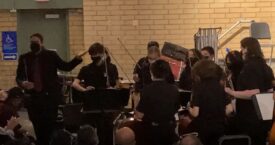
A few people who were actually at the 1963 March couldn’t help but notice the downsizing of the crowd, and though it’s difficult to find a final count—most reports saying just “thousands” or “tens of thousands—the numbers are still significant.  Much smaller commemoration events happened across the country, like the one shown in the brief VIDEO below.  On August 27th about 140 people gathered for a commemorative service at Chicago’s United Methodist “Temple,” then processed across the street to Daley Plaza, the giant front yard of Chicago’s City Hall.  We were dwarfed by the Plaza, but I’ve seen many much smaller rallies there.  Anyway, a friend, Tom Butler, who’s on an anti-racism  committee I chair, has said that when it comes to fighting racism we need to think of “remnants,” not huge crowds.  I have said many, many times that Americans would rather talk about anything—anything—but race, and even fewer, only remnants, will be dedicated to fighting it over the long, long haul it will take to make a significant change.  In 2020, just before the Pandemic shut everything down, I spoke at a convocation, saying that IF we worked really hard, maybe in 40 to 100 years we’d see a less racist, more just and equitable United States.  I still stand by that timeframe, though one of the other speakers at that convocation said that while he respected me, he thought I was being way too optimistic.

This co-opting of “Black Lives Matter” is a famous contemporary example of avoiding issues of race. The same thing happened with MLK Jr.’s “I have a dream” and “The content of their character” phrases.

Just one impediment to progress is society’s attempt to dodge real talk and work on race by co-opting major ideas that fight racism and turning them into slogans to actually avert our attention from race. One of the most spectacular and well-known examples is the way “Black Lives Matter” was co-opted and changed to “All Lives Matter.”*  And MLK Jr.’s “I Have A Dream” speech has also been similarly co-opted.

By now, many people have noted that “I Have A Dream” was easily made into the warm and fuzzy speech of the Civil Rights Movement.  Everyone can relate to having a dream, so it was easy to cuddle up to that phrase and forget that MLK Jr. was trying to tie that phrase specifically to matters of race, not just having any old dream.  But the phrase that perhaps has been co-opted to do the most damage to the fight against racism comes from this sentence in his speech: “”I have a dream that my four little children will one day live in a nation where they will not be judged by the color of their skin but by the content of their character.”  “The content of their character.” The black intellectual Shelby Steel used it as the title to one of his books, a fairly naieve one I think.  It has been co-opted to justify policies that have gone against many of the major programs, like affirmative action, that have fought racism and discrimination in dozens of areas of American life.  It justifies just skipping over color entirely, as if the color of one’s skin didn’t pose an enormous barrier to actually seeing through to any person’s character.  Ironically, more and more whites seem to see the idea of white privilege as something which blinds people to their true character, again as if whiteness doesn’t matter as much as character.  Surely, color shouldn’t matter as much, but it does. It is a roadblock that must be dealt with before we can cuddle up to the idea of character.

* I deal with the damaging effects of saying “All Live Matter” in my sermon “Three Things to Stop Saying.”
More and more many people see King’s “Riverside Sermon” as his most courageous speech. My son Daniel and I set samples of this speech to music, listen HERE. Links in this post will lead to an article on the speech itself.  In it he spoke of the giant triplets of racism, militarism, and economic exploitation.
Go to the Lead Post in the anti-racism workshop Becoming the Beloved Community, and to the Diversity Training and Teaching page on this site.

Posted in Music & Media Podcasts, Social Change | Tagged , , | Leave a comment

The 2023 Printers Row Literary Festival

Come join us for the 38th Annual Printers Row Literary Festival in downtown Chicago this September 9th and 10th from 10 in the morning till 6 in the evening.  Click the link just above for all the details, including a full list of the speakers, the events, the venues, the directions and more.  (You can also access the complete schedule on this site Here.)  It’s the largest, free literary festival in the Midwest. The events range from programs for children to readings and conversations with authors of poetry, fiction, and non-fiction, headlined by Toluse Olorunnipa and Robert Samuels, authors of His Name Is George Floyd: One Man’s Life and the Struggle for Racial Justice, winner of the 2023 Pulitzer Prize for Non-Fiction.

On Saturday, the 9th, at 11:15 a.m. on the Feinberg Foundation Stage, the official Welcomes begin from Commissioner Erin Harkey, Dept. of Cultural Affairs & Special Events, Chicago Public Library Commissioner Chris Brown, Illinois Secretary of State Alexi Giannoulias, and Janice Feinberg of the Joseph & Bessie Feinberg Foundation.  After that Toluse Olorunnipa and Robert Samuels take the stage for a conversation with WBEZ’s Natalie Moore about their Pulitzer Prize winning book.  But the festival actually begins more than an hour earlier when, at 10 a.m. on Center Stage, Miss Chinatown 2023 Amy Xie will do a program for children, telling the story of “Chang’E and Houyi Goddess of the Moon.”

I’ll be there, too.  On Sunday, the 10th, at 1:00 p.m. on the Feinberg Foundation stage I’ll be privileged to moderate a conversation between two literary greats, Ana Castillo and Reginald Gibbons.  They’ll read from their latest work, Ana from her story collection Doña Cleanwell Leaves Home, and Reginald from his latest, Sweetbitter, his first novel. And afterwards we’ll talk about what’s kept them going through their long, illustrious literary careers.  The program’s called “Going the Distance,” and I didn’t need to read very far into Ana Castillo’s latest book to find a possible place to start.  The Prologue to Doña Cleanwell begins: “It starts with the journey; as ever, whether Quixote or Kerouac, you are in search of the Divine. In search of Light, we may find ourselves in a dark room, an abandoned building, on a long thorny road with no end.”

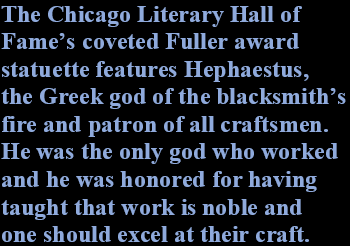
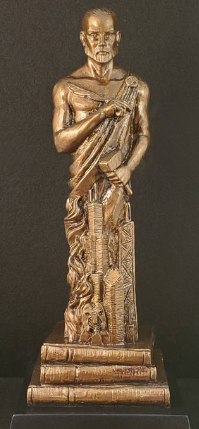
After hosting my session, Linda and I will take charge of the Chicago Literary Hall of Fame table from 4 to 6 p.m.  Table?  Yes, along with over 210 speakers and presenters, and some 75 events, there will be dozens and dozens of exhibitors lining both sides of Dearborn St. for a couple of blocks. Book sellers, literary organizations, shops, and some food vendors, too.  It will be something to behold and remember for a long while.

In addition to the Chicago Literary Hall of Fame website link above, check out many of the articles I’ve written for this site, starting with “The Chicago Literary Hall of Fame.”  This article will soon be updated with links to all the articles I’ve written about the CLHOF and its various events.  My friend Amy Danzer, current president of the Hall’s Board of Directors, is also the Director of Programming for the Printers Row Literary Festival.

Posted in Arts, Writing | Tagged , , , , , , | Leave a comment

What’s Easier?

The 10th and 11th chapters of the Gospel of Matthew are tough going. They’re full of violence and, for those that choose to follow Jesus, intimations of violence.  Perhaps most famously there’s Matthew 10:34-36: “Do not think that I have come to bring peace to the earth. I have not come to bring peace, but a sword. For I have come to set a man against his father, and a daughter against her mother, and a daughter-in-law against her mother-in-law. And a person’s enemies will be those of his own household.”  You’re to “take up your cross.” If you love your father more than Jesus, you’re not worthy. Continuing on to chapter 11, Jesus says that at the judgment it will be worse for Capernaum, his home area, than it was for Sodom. Yet chapter 11 ends with one of Jesus’ most famous utterances. It’s about rest and lightness when he invites people to come to him because his yoke is easy and his burden light.

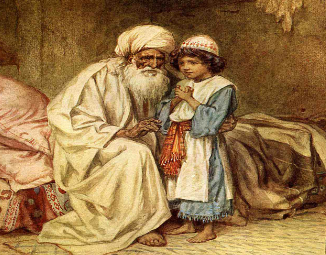
It’s a head-turning surprise if you’ve been following with any closeness at all.  In what sense is following Jesus easy?  The VIDEO below is of a sermon where I try to grapple with this idea.

I had wanted to start by playing one of the toughest rock songs of all time, John Lennon’s “Cold Turkey,” especially the song’s end, where he conveys with frightening groans and screams what it’s like to try to kick heroine addiction “cold turkey.” The congregation was spared from the gut-wrenching experience when our tech person extraordinaire, Daniel Chavez, informed me that since we were live-streaming the service, we didn’t have the rights to use that song.

But to the question what’s easier, going through the intense pain of cold-turkey withdrawal or continuing to take drugs, I thought a significant number of people—perhaps most?—might just continue to take drugs.  A less painful choice in the short run, perhaps, but not in the long run? Perhaps that’s the simple concept: short vs. long runs.

I explore two areas in which Jesus asks us to do some hard things, but things which make our lives incalculably richer in the long run, sparing us and others the pain of choosing a seemingly easier path.  The first is facing yourself: who you are, what you’ve done, and what’s been done to you, and the second is staying in the present.

Resmaa Menachem, in his book My Grandmother’s Hands, writes about choosing clean pain over dirty pain.  I think Jesus urges us to chose clean pain over dirty pain—that is, to truly face who we are, rather than choose the path of dirty pain where we avoid the realities of ourselves, deny the pain we have both suffered and caused, and instead blame others for what we do and become.  He also urges us to do something that may sound simpler but is not: to stay in the present.  I think these two things must be deeply related, though I’m still thinking through the how’s and why’s of this so didn’t go into it in my sermon.  In any case, because both are difficult, I end by turning briefly to the Epistle passage associated with this Gospel passage in the lectionary readings for the Sunday I preached this sermon. It’s the famous passage in Romans 7:15-25, where Paul says the things he would like to do he can’t, but the things he does not want to do, those things he does. Jesus’ grace delivers us from this perplexing paradox, not necessarily by taking away the conflict, but by understanding its deep roots in human life and offering us grace as we struggle through it. We truly want to face ourselves, I believe, but often end up doing the opposite. We want to be lighter in life by staying in the present, but often weigh ourselves down by borrowing trouble from tomorrow and next week and next year.  I recently saw a t-shirt with these words on the front: “The future is where anxiety lives.” Amen to that.

Go HERE for a complete list of sermons, like “Pentecost Means No ‘Supremacies,'” “Sacred Doing,” and “Theology and Race.”
Posted in Faith, Music & Media Podcasts | Tagged , , , | Leave a comment