


Art, Rhythm, Intuition, and Social Change

In his pamphlet The Servant as Leader, Robert Greenleaf writes: “The prudent man is he who constantly thinks of  ‘now’ as the moving concept in which past, present moment, and future are one organic unity.  And this requires living by a sort of rhythm that encourages a high level of intuitive insight about the whole gamut of events from the indefinite past, through the present moment, to the indefinite future.  One is at once, in every moment of time, historian, contemporary analyst, and prophet—not three separate roles.  This is what the practicing leader is, every day of his life.”

Greenleaf-Rhythm1As it is in passage after passage in this seminal essay—the essay which started the field of Servant Leadership studies—there’s much to unpack  and ponder.  Here I want to concentrate on the phrase, “And this requires living by a sort of rhythm that encourages a high level of intuitive insight….”  Though it may be different for each person, each person must ask, “What kind of rhythm would that be, and do I live my life by it?”

Recently, I spoke at a small conference at my college.  The topic was “Grief and Social Change,” and this question of what rhythm we live our life to was one of the three main questions I asked.  It was about 2:15 p.m., and I said, “Let me describe my day to you so far.  I woke at 3:30 a.m. to go from my home in Aurora to prepare and serve a meal from 6:00 to 7:00 a.m. at the Daybreak Shelter in Joliet.  I got home around 8:00 a.m. to pick up my wife and drive her to work in Oak Park.  Getting home around 10:00 a.m., I took about a two hour nap, waking at noon, cleaning up, driving to a sale to pick up things for our new house, before rushing here—often going 80 plus miles an hour down Highway 88—to speak to you for about an hour, after which I’ll return to my office to send back a thesis draft to a graduate student before heading to my God daughter’s 12th birthday around 4:30, then leaving there about 6:00 to attend a function at my wife’s work back in Oak Park.  Now, what kind of rhythm would you say that is?  Is it one that in any way encourages a high level of intuitive insight?”

Greenleaf-Rhythm2It was a ridiculous question, of course.  And my point wasn’t that I was busier than anyone else.  It was a packed schedule, to be sure, but not all that far off from the pace many of us live our lives by much of the time.  It’s a rhythm that encourages a high degree of being frantic, not being intuitive.  In short, we’re just too busy running around to be good leaders.

So what, besides slowing down—way down—must we do?  For a long while now, the general prescription for our times has been to create quiet times, to meditate, to pray—if you’re religious—focusing, perhaps, on some portion of scripture.  What else?  Throughout The Servant as Leader Greenleaf emphasizes artists and the role of art.  “Besides being quieter and meditating,” I asked, “how much time do we spend with art?  Listening to music, for example, not just having it in the background, but attending to it, being with it?”  Or being with a painting, a sculpture, a tapestry, photograph?  Or with nature, which many believe is the greatest art of all?

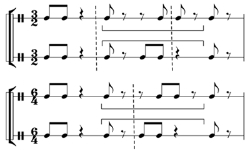
Greenleaf-Rhythm3What might we gain from being with art?  Many things, of course.  Here, I’ll focus on just this: we gain an intuitive sense for patterns and the  rhythm of patterns.  A particular piece of art presents patterns as a unified, organic, rhythmic whole. This rhythmic wholeness is common to all art. Paintings display it as much as music does, and architecture has been described as “frozen music.”  In this way artistic rhythm parallels, develops, and nourishes that organic sense of the relationship between past, present, and future Greenleaf speaks about.  It nourishes and develops a special feeling for rhythms and patterns of wholeness, which produce foresight, because past patterns you remember, and patterns you’re experiencing now, can help you feel what may be coming next.  Greenleaf calls foresight the servant leader’s “central ethic.”  An intuitive sense of pattern and rhythm helps the servant leader “know the unknowable,” say what we must be doing, and set a direction for us.  It allows the servant leader to conceptualize these things—that is, what will happen if we go in this direction, act in this way—and conceptualization, says Greenleaf, is the leader’s central talent.  Spending time with art is one of the prime ways to develop a sense of rhythm—a sense of pattern and wholeness—that encourages the highest quality intuitions.

This article is part of a series on Robert Greenleaf’s The Servant as Leader.  Go to the series’ Lead Post.

Posted in Social Change | Leave a comment

The “Structure” of “The Servant as Leader”

Note:  This is the lead post in a series on Robert Greenleaf’s The Servant as Leader.  A seminal piece in leadership theory, this small book—a long essay, actually—started the whole field of Servant Leadership studies.  See end for a list of articles in this series. Also, go to the main page for my course Leadership for Social Change.
____________________

Greenleaf-CenterWhen I speak of the “structure” of Robert Greenleaf’s The Servant as Leader, I’m speaking of the structure I see in it, the structure I use when I’m leading a discussion of it. Structure, not to mention logical structure, didn’t seem so important to Greenleaf.  “I didn’t get the notion of the servant as leader from conscious logic,” he says early in his essay.  “Rather it came to me as an intuitive insight.  And I do not see what is relevant from my own searching and experience in terms of a logical progression from premise to conclusion.”  Furthermore, he admits that there “may be real contradiction in the servant as leader,” and that his own “perceptual world is full of contradictions.”  The essay, therefore, proceeds in short, reflective, questioning sections, usually just two to five paragraphs long, none fully or formally developed. As a kind of outline for discussion, however, I see the essay falling very roughly into three parts.

PART ONE  focuses on the Individual.  “Who is the Servant-Leader?” asks one of the main section headings.  Greenleaf expresses extraordinary faith in the power of the individual, so much so that as he speaks of the importance of listening for prophetic voices in the world, he says, “It is seekers…who make the prophet.”   “The faith [my italics] that sustains the choice to be a servant leader, Greenleaf says, is “psychological self-insight.”

Greenleaf-ServantLeadBookPART TWO  explores eight Qualities or Actions that both define and develop the servant leader.  These are:  1) Withdrawing, 2) Accepting, 3) Knowing (the unknowable), 4) Foreseeing (what he calls the servant leader’s “central ethic”), 5) Perceiving, 6) Persuading, 7) Acting, and 8) Conceptualizing (the servant leader’s prime talent).

PART THREE  focuses on Community, which he calls “The lost knowledge of these times.”  It is here he speaks of those who take up social change as doing so to “heal themselves” from some grief, some wound, some pain.  “There is something subtle communicated to one who is being served and led if, implicit in the compact between servant-leader and led, is the understanding that the search for wholeness is something they share.”  That sharing creates community.  Writing in 1970, he says, “The signs of the times suggest that…the next 30 years will be marked as the period when the dark skinned and the deprived and the alienated of the world effectively asserted their claims to stature…” and “were not led by a privileged elite…It may be that the best that some of today’s privileged can do is to stand aside and serve by helping when asked and as instructed.”  Nearly 50 years later, we begin to see the prescience of this comment.

This series seeks to reflect on some of the most important insights of this seminal essay, beginning below with the connection between grief and social change.  This article, in part, also introduces a video of a news report on one of my graduate student’s projects in the Leadership for Social Change course.


Articles in the “The Servant as Leader” series:
Grief and Social Change
Homelessness and Me
 Art, Rhythm, Intuition and Social Change
Servants Know First: A Sermon
Inside Dance
Three Central Servant Leadership Questions
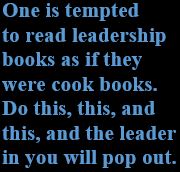
The Paradox of “Leadership Lists”
Prophecy, Rhetoric, and Servant Leadership
Servant Leadership in the “Real World”?
♦ Every Person’s God-Given Ability to Contribute.”  In this and other posts I mention Greenleaf’s idea of the importance of who leads, mentioned above.

Posted in Social Change | Tagged , , , | Leave a comment

Homelessness and Me

I have never been close to being homeless.  I’ve worked in homeless shelters for over 30 years, though, first at Hesed House in Aurora, and now for over 15 years coordinating my church’s homeless program at the Daybreak Shelter in Joliet, Illinois.  Why?

Daybreak Homeless Shelter in Joliet, IllinoisThere are easy answers to this question, and harder ones.  On the easy side, it’s one of the ways I’ve found to carry out Jesus’ command to serve, especially the poor, and I’ve made many friends—some of them my closest—with those who have served at Daybreak with me.  Some have served there longer than I have.  I’ve made friends with the Daybreak staff, too, and also with some of the guests, though that’s always an ironic thing. You make friends with some you see over and over, yet the fact that you see them over and over often means they’re chronically homeless.  You wish they could move on.

In his seminal pamphlet The Servant as Leader—the essay that started the field of Servant Leadership studies—Robert Greenleaf remarks that those who undertake social change do so to heal themselves.  I’ve written about this before in “Grief and Social Change,” an article that includes a Video about one of my graduate students, who did her project in my Leadership for Social Change class motivated by her daughter’s tragic death.  When Rick and Desiree Guzman founded Emmanuel House, our family undertook its own journey to heal itself from the loss of its youngest member, Bryan Emmanuel Guzman.  Prompted by Greenleaf and many life experiences, I think about this connection between social change, social service, and grief and pain a lot.

Greenleaf-ServantLeadBookIn his book Change the World, one of the best extensions of Greenleaf’s work, Robert Quinn asks us to consider what inner pain drives us towards or keeps us away from effective leadership and social change.  Strangely—because I’ve taught social change for 20 years—it’s been only three or four months since I realized what pain has driven me to homeless shelters for so long.  It’s been this life long pain of hardly ever feeling at home, anywhere.  It’s manifested itself in many ways, one of which has to do with my being Filipino, and I don’t mean being a minority in American culture, though that’s part of it.  I mean not feeling truly attached to my homeland.  Though I was born in the Philippines, I left when I was 11 months old and have never returned, and from the time we could understand anything, my parents always told us the Philippines was never a place you wanted to be.  When my Father’s mother died—I have no conscious memory of her, my grandmother—my Mother and Father fought over whether he would go back for his own mother’s funeral.  He didn’t go.

Among my Filipino friends I’m not completely at home either.  Though they love and respect me, I’m in a profession very different from them, and—most of all—I no longer speak my own dialect, Ilocano, and never did speak Tagalog, what most of them speak.  The day when I began losing my language is one of the most vivid memories in my life.  That day my father drives rashly up our driveway in Neosho, Missouri.  I hear the scattering gravel and his skidding, and remember how he came into the room, sat down at the dining room table, and, breathing heavily, called my mother, saying to her when she rushes in, “You will never speak to the children in our dialect again.”  From that time onward I heard fewer and fewer Ilocano words and phrases, though I remember them saying to Filipino friends about me, “No use speaking Ilocano. He understands what you’re saying.”  But as I heard it less land less, and spent more and more time with white friends in school, I understood less and less.  For many reasons, this loss of my native language has been a deep, isolating pain for me, a pain that doubles—at least—my detachment from my homeland.

That’s just one aspect of my hardly ever feeling at home, and I suppose it’s prompted at this moment because I’ve just moved into a new house where I’m not feeling at home yet.  I miss the old one, and the old neighborhood, so much I feel like I’ll never feel at home here.

I’m acutely aware, however, that I’m in a home, not at all homeless, so I don’t mean to suggest that the inner pain of hardly ever feeling at home is the same thing as actually being homeless.  I just know now that I’ve always felt very deeply a small part of what the homeless must feel.  I have felt “at home” with them, have felt a kind of healing that has kept me coming to shelters over and over to make whatever difference I can.

  The distinguished homeless advocate Diane Nilan started Daybreak Shelter.  Follow the link to see the considerable amount of material on her on this site.  Go HERE for a schedule of our service days at Daybreak Shelter.  Also, read a review of a movie about homelessness and public libraries, The Public.

 This article is part of a series on Greenleaf’s The Servant as Leader.  Go to the series’ Lead Post.

Posted in Social Change | Tagged , , , | Leave a comment