

The Black Chicago Renaissance

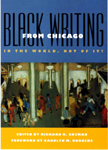
The Black Chicago RenaissanceIn the opening line of her introduction to The Black Chicago Renaissance, Darlene Clark Hine writes that “beginning in the 1930’s and lasting into the 1950’s, black Chicago experienced a cultural renaissance that rivaled and, some argue, exceeded the cultural outpouring in Harlem” (p. xv).  I am one of those who has argued that.  My book, Black Writing from Chicago (2006), focuses on various literary forms, and the ten essays following Hine’s introduction not only put that writing into more cultural, historical, and social context than I had space to do, but also make clear that musicians, performers, and visual artists were perhaps an even more vital part of that outpouring.

Samuel A. Floyd Jr.’s “The Negro Renaissance,” while focused on music, most succinctly captures the importance of seeing all artistic productions holistically and in context.  Many leaders of the Negro Renaissance counseled turning away from black arts they deemed “low,” but Langston Hughes and many of his peers—especially in Chicago, where Hughes had deep professional roots—fought against that distinction.  “Let the blare of Negro jazz and the bellowing voice of Bessie Smith singing Blues penetrate the closed ears of the colored near-intellectuals,” Hughes wrote (p. 40).  This “was part of the strategy (conscious or unconscious),” writes Floyd, “to merge social, political, and artistic values in a frontal assault on access to the fruits of white society” (p. 40).

Elsewhere in the volume, Elizabeth Schlabach explores how Chicago luminaries Richard Wright and Gwendolyn Brooks conceived black identity forming in the struggle between the confines of material reality and expansive inner consciousness.  David T. Bailey’s essay on Horace Cayton—the best piece I have read on Cayton—explains how his conflicts over blackness caused him to fade from sight while the book he co-wrote, Black Metropolis (1945), remains one of the most venerated pieces of black scholarship of all time.  Hilary Mac Austin’s “The Defender Brings You the World” expands our understanding of the Chicago Defender’s enormous national influence by following Patrick B. Prescott Jr.’s series on world travel, which the Defender published to help expand black global consciousness.

Leroy Carr

The great bluesman Leroy Carr, from Indiana, a great influence on Nat Cole

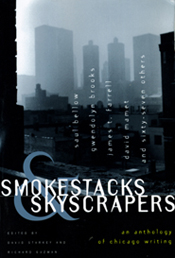
Readers of this magazine (see below) will be delighted to find Indiana’s own William Edouard Scott commanding much attention.*  Widely considered the dean of African American painters of the time, Scott is the fourth most referenced single person in the volume, behind only Richard Wright, Charles White, and Horace Cayton.  As for writers, Indiana was originally home to Metea, Simon Pokagon, George Ade, and Theodore Dreiser, all of whom David Starkey and I included in Smokestacks and Skyscrapers (1999), but connections of black Indiana and Chicago writers during the Black Chicago Renaissance need exploration.

I found some exclusions strange, however. No contributor mentions Frank Marshall Davis, important both to the Negro Renaissance and the Black Arts movement.  He also Nat "King" Cole at the pianocontributed to the Gary American, a significant Indiana publication.  Musically, Nat King Cole goes missing.  Perhaps we associate him more with California, but he was part of the extraordinary arts legacy of Chicago’s DuSable High School, and, in Chicago during the Renaissance period, was working out his own important responses to Earl Hines, who is talked about in relation to Louis Armstrong’s seminal Chicago recordings.  Another of Cole’s great influences, however, would also have led us back to Indiana.  It was Leroy Carr, who along with Scrapper Blackwell—also from Indiana—formed one of the greatest duos in blues history.

Scrapper Blackwell

Scrapper Blackwell, Leroy Carr’s guitarist, also from Indiana. His “Kokomo Blues” becomes “Sweet Home Chicago.”

Of course, one cannot possibly include every important person in a volume, so ending with my surprise at some omissions is not a reflection on the overall excellence of The Black Chicago Renaissance.  Still, as I know acutely from those I missed or did not have space for in my own books about Chicago, every miss leaves out many other connections.  It was Scrapper Blackwell’s “Kokomo Blues,” for example, that transformed into Chicago’s anthem—“Sweet Home Chicago.”

_______________

The Black Chicago Renaissance.  Edited by Darlene Clark Hine and John McCluskey Jr. (Urbana: University of Illinois Press, 2012. Pp. vii, 214. Illustrations, notes, index. $80.00.)

* My review of this book appeared in the September 2013 issue of the Indiana Magazine of History, University of Indiana, Bloomington.  Because of the magazine’s location, I was asked to mention some links back to Indiana.  As it turned out, there were many important ones.

Go to the Teaching Diversity main page.

Go to a list of Black Writers.

 Read more reviews on this site.

Posted in Arts, Black Writers, Chicago Writing, Diversity & Multiculturalism | Tagged , , , , , , , , , , , , , , , , , , , | Leave a comment

Voices: A Film from Bahrain

Voices: A Film from BahrainWithout the ending credits, Hussain AlRiffael’s film Voices is barely three minutes long, but it may be one of the most powerful three-minutes in cinema today.  I’m going to describe most of the “plot,” but this won’t spoil it entirely.  I’ll leave out some details—nuances of acting, timing, editing, sound that add pathos and tragedy to the film’s arc.  Words can hardly capture it, so see it for yourself anywhere you can.   Afterwards, I saw audience members at a recent film festival* I ran bent over, palms to their foreheads, stunned.

Sound of children.  Slow zoom into a doorway.  In a kitchen a Muslim woman (actress Shafeeka Yousif) cooks.  She’s peeling a potato.  She’s bathed in the sounds of children playing, jostling, laughing.  Cut to a close street-level view.  A yellowed leaf falls, screen left, quivering on the ground for a few seconds until a wind blows it away.  Back in the kitchen, the potato cut, the woman begins frying the pieces, when suddenly the sounds of children stop.  A click.  The woman pauses, walks off camera.  We see her hand eject a cassette from a tape player, turn the tape over, re-insert it, push the play button.  A moment for the tape’s leader to clear, then sounds of children resume.  She walks away into a dark inner doorway.

All the wars.  All the broken families.  The children.

_______________

* The film festival was the Third Annual Fall Festival of Independent Film at North Central College, an event associated with the Naperville Independent Film Festival (NIFF).

  • Go to a post and links to schedules for the 2013 film festival at North Central College.
  • Go to the NIFF website for more about this festival, soon to be an Academy Award certified festival.  It is in its 6th year.
  • Read more reviews on this site.


Posted in Arts | Tagged , , , , , , , | Leave a comment

Sterling Plumpp: Survival Blues

Sterling PlumppBorn in rural Mississippi in 1940, Sterling Plumpp has for thirty years taught at the University of Illinois, Chicago, and produced a body of poetry giving him considerable claim to be one of the country’s most distinguished blues-jazz poets. Somber inflections from his Mississippi origins combine with a rougher, more boisterous Chicago voice to create a style that sets him apart from poets like Langston Hughes and Michael Harper, who have also written many jazz-blues poems. Plumpp’s lines alternate between hip jumpiness and gorgeous, ghostly, elegiac reflection. When I put my book Black Writing from Chicago together, I chose the poem “#13” from his haunting collection Blues Narratives (1999), which centers on his mother’s death, and through that death, ironically, the Black will to survive:

I commit
to memory your agony
and confessions of
the last slave to die
in America

(It is your responsibility
to carry it)

You tell

it to me hours before
you are gone

And looking at his mother before the viewing, the poet says:

…the morgue
cosmetician thinks
you are going
to a party

I order him
to remove powder
and rouge
so blues
lines can still
reside in this symphony
of night which is
your face

I also used two parts of the poem “Be-Bop” from his book The Horn Man (1995), based on the life and music of legendary Chicago saxophonist Von Freeman, whom Plumpp calls “Von. / A / Free / man…,” thus making him a symbol of various modes and energies of freedom. When Freeman died in August 2012, I posted a short note, “Sterling Plumpp Salutes Von Freeman,” quoting some lines from “Be-Bop.” You may go to the full post Here, but these lines and a few more—typically gorgeous—deserve re-posting here.

Be-Bop is precise clumsiness.
Awkward lyricism
under a feather’s control.
A world in a crack.
Seen by ears.
Von Freeman’s
tenor Apocalypses /beginning
skies fussy about air and protective
of trombones on Jacob’s Ladder…

Harmonic nightmares obeying
pianissimos of tones…
style punching music
with garlic in temp
Billie’s pain
and a cup of insinuations
drunk by laughter
before tears arise.

Ornate with Smoke by Sterling PlumppAmong Sterling Plumpp’s other books are Black Rituals (1972), a prose work dealing with psychological oppression in the black community, and many books of poetry, including, Clinton (1976, winner of an Illinois Arts Council Literary Award), The Mojo Hands Call, I Must Go (1982, winner of the Sandburg Poetry Prize), Blues: The Story Always Untold (1989), and Ornate with Smoke (1997). Also in the post “Sterling Plumpp Salutes Von Freeman,” I quoted Plumpp saying that his poems trace “the survival lines of my people in the many ways they did things.” His music poems illustrate what Ralph Ellison one said about the blues: that they were “one of the techniques through which Negroes have survived and kept their courage during the long period when many whites assumed, and some still assume, they were afraid.”


  Go to a list of black writers on this site.

  Go to the Teaching Diversity main page.

Posted in Black Writers, Music & Meaning, Poetry | Tagged , , , , , | Leave a comment