
Randy Newman: Cruel and True

Randy Newman explains his concept behind “I Want You To Hurt Like I Do.” Berlin, 1994.

No one writes songs quite like Randy Newman, and certainly not about the subjects he writes about.  He celebrates L.A. in “I Love L.A.” by pointing out a bum on his knees. In “Shame” an old New Orleans rich guy begs his young, kept paramour for love while fighting off insistent background singers who keep repeating “Shame, shame, shame.”  In “Rednecks,” from what’s perhaps his masterwork album Good Old Boys, the chorus goes “We’re rednecks, we’re rednecks. We don’t know our ass from a hole in the ground. We’re rednecks. We’re rednecks. We are keeping the n- – – – rs down.”  In “Sail Away,” he imagines a slaver trying to convince an African to get on a slave ship: “In America you get food to eat. Don’t have to run through the jungle and scuff up your feet. You just sing about Jesus and drink wine all day. It’s great to be an American.”  And in “The World Isn’t Fair” he not only sums up Marxism beautifully and masterfully in just a few lines of pop doggerel but ends by talking to Marx himself: “They tried out your plan. It brought misery instead. You see how they worked it. Be glad you are dead. Just like I’m glad I’m living in the land of the free, where the rich just get richer, and the poor you don’t ever have to see.”  He also tosses off songs that become the stuff of weddings and goo goo eyes, like “Feels Like Home,” though there’s a strange darkness in the bridge, the darkness of a breaking window and a wailing siren.  Another song like it is “I Miss You,” which he wrote for his first wife after he’d married his second.  “I couldn’t think of a better way to piss off two women at once,” he once said of it.  He’s a master of songs which sound romantic, even hopeful, but are really the opposite, like “Marie.” There’s “Short People,” of course, and movie scores and songs—including Toy Story and “You’ve Got a Friend In Me”—some he’s won several Academy Awards for.  He’s one of my favorite performers as well.  I love his faux-New Orleans mush mouth singing style, and also the fact that he’s said his most important early influence was Ray Charles, one of the most important influences on my own life as well.

I could wander around quoting this and that for a long time, but all this wandering is just preparation for saying he’s also written “I Want You to Hurt Like I Do.”  As he explained in a 1994 concert in Berlin, he wanted to write an anthem like “We Are the World.” He’d get a bunch of “good celebrities” to sing along, too, but the sarcastic good fun in his explanation doesn’t quite prepare you for the song’s shock.

“I ran out on my children. I ran out on my wife. Gonna run out on you too, baby. I’ve done it all my life.”  It’s a great beginning. He tells us everyone cried the night he left—well, almost everybody.  His little boy just hangs his head.  So he puts and arm around his little shoulders, and this is what he says: “I just want you to hurt like I do.  I just want you to hurt like I do. I just want you to hurt like I do. Honest I do. Honest I do. Honest I do.”

I still feel the shock of it, even though I know it’s a put on.  It’s a perverse put on of “We Are the World” that strikes one as cruel perhaps because we suspect it might be true.  It’s an eye for an eye world. Even more sad, even more pervasive, even if it seems less threatening—it’s a hurt for hurt world.  It’s a therapy cliche that “hurt people hurt people.” But surely, we think, the hurt for hurt should be aimed at the wife he’s leaving, not the child.  Actually, though, I wouldn’t put it past us to also be aiming for those little ones who just hang their heads.

Go HERE for more reviews and commentary.

Posted in Music & Meaning, Music & Media Podcasts | Tagged | Leave a comment

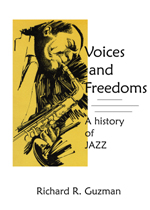
Voices and Freedoms: The Intro Show

The Video/Audio below is an excerpt from the Intro Show to my radio series Voices and Freedoms: A History of Jazz, based on my 1976 book of the same name.  The 16-part series played across the nation for five years in the late 70’s/early 80’ and holds its relevance—or is even more so—today than it was back then.  The excerpts present about 6 to 10 minutes of the original 30-minute broadcasts. The link above takes you to information about the book and our plans to re-release it and provide access to the full-length original shows. Go HERE for a complete list of shows and links to all excerpts.
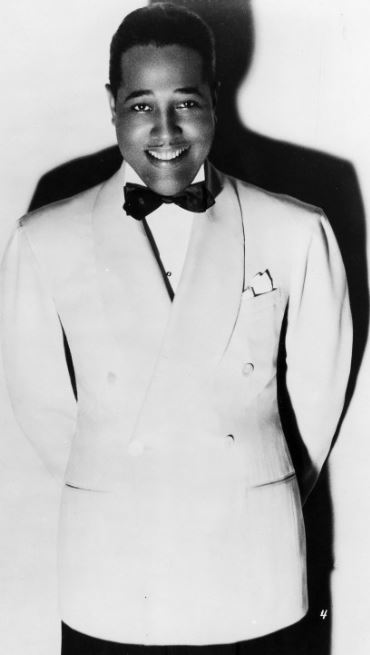
 

My first book, Voices and Freedoms: A History of Jazz, came out in 1976, and even before the ink was dry the idea of a radio show was proposed and we began work on it at the University of Virginia.  The show would promote not just the book but the university’s entire Department of Continuing Studies.  The radio engineers weren’t welcoming at first.  “See that line,” said the head engineer, Eric, pointing to a heavy painted stripe on the floor at the entrance of the control booth.  “You’re on that side.  I’m on this side.  You don’t cross over, ever.”  I had to earn my chops, had to prove to them I had some radio talent, radio know how.

I didn’t.  But I’d always wanted a radio show.

At Cal State, Hayward—Hay U, we used to call the place, which is now Cal State East Bay—a few fellow graduate students remarked that I seemed to be the least dedicated of them all because what I really wanted to be was a DJ.  I grew up listening to great Bay Area radio stations and, as I write, I have before me a parody book put out by Terry McGovern, one of the most popular DJ’s on KSFO, AM 560.  Called Listen to the Loud, it spoofs the poet Rod McKuen, whose ultra-mushy, ultra-sensitive poems were so popular during the day.

I’m much better on the radio, or narrating something now, but listening to these jazz shows now, I have to admit I wasn’t very good.  I’m clearly reading a textbook, not just speaking naturally.  I must have been good enough, however, because Eric and the other techs soon extended their good graces to me and heartily invited me to cross the control booth line any time I wanted.  Before long, UVA radio’s producer, another Rod, Rod Collins, was running down the stairs at the radio station shouting, “You’re playing in Poughkeepsie!  You’re playing in Poughkeepsie!”

“Where?” I asked. “Ever heard of Vassar?  Huh?” he replied, looking bug-eyed at me as if I were an idiot. With Vassar leading the way, many other stations on the Intercollegiate Broadcasting System would be picking up the series, too.

Freddie Hubbard and Julian Bond join me on the broadcast as I attempt to set up the whole series.  The Intro Show focuses mainly on the book’s unusual title.  People have often referred to it as “Voices of Freedom,” but it’s Voices AND Freedoms.  Perhaps the freedoms part is easiest to explain.  In the book and radio series it means first the growing freedom of forms that jazz would take as it progressed from its earliest brass band musical influences to the free jazz movement and beyond. It also meant the freedom struggle, primarily of American Black people.  Looking back, I’m somewhat startled to see how I was already writing and speaking deeply about a topic that has occupied so much of my academic and social change efforts over the decades.  That’s why I believe the book is perhaps as, or even more, relevant today as the struggle of Blacks for their freedom and the freedom of other people of color—and even white people—seems to have reached another crucial break point.

The voices part refers to jazz’s obsession with the human voice.  Early in the book, and in what you’ll hear in the excerpt of the Intro Show below, I say this: “The sound of the human voice is more precious than we know.  It breaks out in laughter, in words bitter or sweet, shy or commanding; it sighs, cries and groans; it lapses into silence, which can be one of its most expressive moments. And jazz has always been obsessed with it.  Though basically an instrumental music, jazz tone, concept, and feeling derive mainly from the vocal milieu of black folksong.  When jazz musicians play, they speak, growl, moan, mutter, croon, confess the blues, shout, whisper: they treat their instruments as extensions of the human voice…The human voice is one of the most human things about us.  It is evidence of the presence of a living creative human being, and in a deep sense that’s what jazz is about: it’s about the enduring, free presence of such human beings.”  Learning to hear the human voice indwelling in jazz is the easiest way to understand and relate to the widest variety of jazz music, from the most constricted songs of its early history to the wildest, freest songs it produces today.

Go to the Training and Teaching Diversity main page.

Posted in Diversity & Multiculturalism, Jazz History, Music & Meaning, Music & Media Podcasts | Tagged , , | Leave a comment

Blues: Tone, Form, Attitude

This short article accompanies the release of excerpts from my radio series Voices and Freedoms: A History of Jazz, based on my 1976 book of the same name.  The 16-part series played across the nation for five years in the late 70’s/early 80’ and holds its relevance—or is even more so—today than it was back then.  The excerpts present about 6 to 10 minutes of the original 30-minute broadcasts. The link above takes you to information about the book and our plans to re-release it and provide access to the full-length original shows. Go HERE for a complete list of shows and links to all excerpts, and watch and listen to the Video/Audio below.


After Emancipation, as blacks sought greater equality, many whites grew more bitter and fearful, and—though slavery was certainly the most extreme form of segregation—segregation throughout the whole of society seemed to begin in earnest.  Legally, it culminated in the 1896 Supreme Court decision in the case of Plessy vs. Ferguson which upheld an 1890 Louisiana law requiring railroads to provide “separate but equal” accommodations for white and black passengers.  The Court said that recognition of color differences had “no tendency to destroy legal equality,” that the Fourteenth Amendment was not intended to enforce “social, as distinguished from political, equality or a commingling of the races upon terms unsatisfactory to either,” and that if the enforced segregation “stamps the colored race with the badge of inferiority,” it is solely because “the colored race chooses to put that construction upon it.”  Justice John M. Harlan cast the lone dissent, thereby presaging by nearly sixty years the Court’s 1954 decision in the case of Brown vs. Board of Education, Topeka.

At about this same time, in the late 1800’s and early 1900’s, as segregation gained legal status, a great burgeoning of blues occurred.  Born and bred in the South, it flowed northward in a migratory pattern that is a study in itself.

Show Number Three of Voices and Freedoms looks at blues in three ways: As a tone of voice, as a musical form, and as an attitude towards life born out of a need to survive in an increasingly segregated society.  This excerpt touches on all three.

The blues actually does deserve to be called, as it often has been, a “secular spiritual.” It was a unique and powerful blend speaking about tragedy and comedy at the same time.  Blues came from a people who for hundreds of years, says Ralph Ellison, “…could not celebrate birth or dignify death and whose need to live despite the dehumanizing pressures of slavery developed an endless capacity for laughing at their painful experiences.”  He calls the blues a technique for survival (read more about that HERE). Spiritual people often labeled the blues “devil music,” but actually both helped Blacks survive, the spirituals in their way, the blues in theirs.

Go to the Training and Teaching Diversity main page.

Posted in Jazz History, Music & Meaning, Music & Media Podcasts | Tagged , , , , | Leave a comment