
Tara Betts: Amalgamation Improvisation Within Black

betts1In my book Black Writing from Chicago, I included two Tara Betts poems, “Two Brothers” and “A Mixed Message,” the first featured in the marvelous Steppenwolf Theatre production Words on Fire (2000), a celebration of Chicago poetry.  No wonder: it paints a vital, endearing scene also embodying an important problem.  Two brothers: one who should be in school but isn’t, and his baby brother who “hovers like a satellite”—only five, but “His knit cap blares out / With the curvy, capital W in yellow on his forehead  / He could step to the mic /  Posture each word like lunging Kung fu kicks.”  Then:

A woman tells him to tell his Big Brother to stay in school
Like the sisters
Leaving him a heap of sepia butterflies
Dripping deliberate dew sweat
Dropping like ice cubes out of trays
Steel heated into malleable liquid
Big Brother & Baby Brother
Become black silk and amber velvet
Under weight of woman smile

The second poem, “A Mixed Message” begins:

What makes me so damned tragic?
not a fragmented exotic mystery
jezebel born from the blood of rape
nor child of the so called integration experiment

The tragedy has been embodied in thousands of ways, including laws to keep “races” pure. But she defies categories, is what Aryan Nations feared, fills in “all the gaps / where miscegenation laws / blotted my birth.”  She recalls how her father held her “through 11-year-old / tears calling me by name / calling me beautiful,” as she endured nicknames like “zebra, mutt or half-n-half.”

betts3But through the tragedy, the poem shows that while Betts is grounded in an African-American identity, uncertain though it is, her vision is truly pan-ethnic, born of a feeling for the “amalgamation improvisation / within Black,” the criss-crossing of blackness with whiteness, with Mexican, Filipino, Puerto Rican, with North and South and the international that reaches to Egypt and beyond.  Blackness, then, is as much a process—collaboration, amalgamation, improvisation—as anything else.  Such a “collaborationist” ethic shows not only in her writing, but in the way she became one of the most involved artist in Chicago: teaching, conducting workshops, and performing for the Guild Complex, Gallery 37, Young Chicago Authors, Columbia College, Northwestern School of Law, and primary and secondary schools throughout the area.  A fixture in Chicago performance poetry, Betts was involved in the “Women Out Loud” series at Chicago’s Mad Bar and has been part of the Mad Bar’s teams in the National Poetry Slam competitions.

Betts’ poems have appeared in many publications, including Obsidian III, Mosaic, Rhapsody in Black, Dialogue, Crab Orchard Review, Callaloo, The Columbia Poetry Review and the Tia Chucha press 20th anniversary anthology Power Lines.  In 2010, Essence magazine named her one of its “40 Favorite Poets,”  She received her MFA in Poetry from New England College, residencies and fellowships from the Ragdale Foundation, Centrum and Caldera, and the Illinois Arts Council, and her PhD in English from SUNY Betts.  Her poetry books and chapbooks are Can I Hang?, Switch, Break the Habit, and Arc & Hue, and she has been anthologized not only in my Black Writing from Chicago, but also in such books as The Break Beat Poets, and Octavia’s Brood: Science Fiction Stories from Social Justice Movements.  In 2011 the Peggy Choy Dance Company commissioned her to write a series of poems and monologues for “THE GREATEST!”: An Homage to Muhammad Ali.

She has been a lecturer in creative writing at Rutgers University, though her major passion remains performance.  She continues to embody the mixing she celebrates in “A Mixed Message” through performances in Cuba and London, and from coast to coast in the U.S. at venues such as the Arie Crown Theater, The New School, The Museum of Contemporary Art, Studio Museum of Harlem, Lincoln Center for the Performing Arts, The Metro, Cornelia Street Café, Bowery Poetry Club, Nuyorican Poets Cafe, Schomburg Center, Yerba Buena Cultural Center, the Field Museum of Natural History, and Harvard and Yale universities.  She has also appeared on HBO’s Def Poetry Jam,  and in the Black Family Channel series “SPOKEN” with Jessica Care Moore.

 Go to a list of Black Writers and to the Teaching Diversity main page.

Posted in Black Writers, Chicago Writing | Tagged , | Leave a comment

Era Bell Thompson: Affirming American Meritocracy

Nearly without fail, the excerpt from Era Bell Thompson’s American Daughter, which I included in my book Black Writing from Chicago, is my students’ favorite.

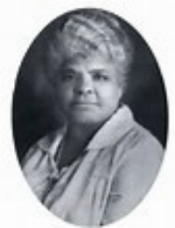
eb-thompson2bLeaving her native North Dakota in 1931, Era Bell Thompson came to settle in Chicago in 1933.  In 1945 she received a Fellowship in Midwestern Studies from the Newberry Library to write her classic autobiography American Daughter.  She titled it in reaction to Richard Wright’s Native Son, a national sensation in 1945, intending to provide an view opposing Wright’s bleak image of American life.  “Usually an autobiography is written near the end of a long and distinguished career,” she said, “but not taking any chances, I wrote mine first.”  American Daughter was published with great success the following year, and soon afterwards John H. Johnson—also a leader in extolling a more middle class, non-Richard-Wright view of America—hired her to work at his publishing firm.  By 1951 she was co-managing editor of Ebony, a job she held until 1964 when she became the magazine’s international editor, a post which nourished her ever-present need to wander and resulted in her 1954 book Africa: Land of My Fathers.  In 1963 she edited the interesting White on Black: Views of 22 White Americans on the Negro.  The University of North Dakota bestowed an honorary doctorate on her in 1969, and in 1976 she received the state’s highest award, the Teddy Roosevelt Rough Rider Award.

eb-thompson1The excerpt I included in Black Writing from Chicago comes from near the end of American Daughter and begins with a near-mythic meeting between Thompson, representing another era of Black aspiration, and Robert S. Abbott, a now old and—at least as Thompson sees him—“bitter” symbol of the old guard for whom race was an ever-present obstacle.  Though obviously greatly plagued by race herself, Thompson is more willing to take to heart the words of the elderly guide she meets on her first visit to the Chicago Board of Trade.  Beaming when she tells him she is going to school and holding up to her the example of someone who has “made it,” he says: “No matter what you do, do it well, be the best there is, and remember, here in America all things are possible, everyone has the opportunity to become great.”  I end my excerpt with Thompson saying, “The chasm is growing narrower.  When it closes, my feet will rest on a united America.”

This is why the vast majority of my students love this excerpt so much.  It affirms one of America’s founding myths: meritocracy.  Notwithstanding the evident falseness of the myth—“everyone” doesn’t have the talent, and won’t have the luck or money or patronage it takes to become great—it is still not an entirely ignoble thing to believe it.  For one thing, “great” could be a relative term meaning not stardom but “just” a better life than your parents had, and the elderly Board or Trade guide doesn’t guarantee greatness, just the opportunity.  The equality of that opportunity, though, has come under greater and greater scrutiny and suspicion.  Is America still the land of opportunity?  In an age where we have the greatest disparity in wealth distribution in American history—I report on this in my “Graphic Inequality”—and progress on alleviating racism seems excruciatingly slow to non-existent, a consensus against the guide’s optimism seems to be forming.  It matters, of course, if you’re liberal or conservative.  If liberal, you see upward mobility in the U.S., for example, lagging behind much of Europe and other parts of the world. But Scott Winship of the conservative Manhattan Institute for Policy Research, for example, writes, “My research finds that roughly 40 percent of today’s 40-year-olds who grew up in the bottom fifth of income remain in the bottom fifth. But over 80 percent are better off in absolute terms than their parents, after adjusting for the rising cost of living and declining household size.”  It’s the old relative vs. absolute argument.

The subtitle of Black Writing from Chicago is In the World, Not of It?  In my Introduction I write about how blacks have argued for decades about the extent to which they should fully want to be part of U.S. culture—that is, in part, the extent to which they should buy in to this myth of glowing opportunity.  As I say in my introduction to the book, it often comes down to how one views, and buys into, American middleclassness.  Era Bell Thompson buys in.  So does Leonidas Berry, and Dempsey J. Travis, and even Leanita McClain, though all these less so than Thompson.  Sometimes much less so, especially McClain.   I included two of McClain’s essays, “The Middle-class Black’s Burden” and “How Chicago Taught Me To Hate Whites.”  The first reaffirms opportunity, something McClain seized, rising high in the Chicago Tribune hierarchy.  However, just the title alone of the second essay tells you that, in the end, McClain finds opportunity—especially Black middleclassness—tainted, even foreclosed, by racism.

Go to a list of Black Writers on this site, and to the Black Writing from Chicago page to learn more and buy the book.

 The issue of Black middleclassness is one of the central issues in the excerpt I included from Barack Obama.

Go to the Teaching Diversity main page.


Posted in Black Writers, Chicago Writing | Tagged , , , , , | Leave a comment

Guerilla Gardening

The statistics are hard to believe:  70% of Americans overweight or obese, adult obesity doubling between 1980 and 2008, but tripling for kids, so that today a third of U.S. kids are overweight or obese.  This in an era where health information abounds, an era of gyms, Fitbits, high tech apps.  We’re so sophisticated it’s easy to overlook simpler solutions.  I’ve heard, for example, that if you want to help kids with their weight one of the best things to do is teach them to grow their food: teach them to garden.  During WWII U.S. diets were, overall, among the healthiest in our history because we had less sugar and fat around—these were reserved for our soldiers—and because so many, also as part of the war effort, gardened.  “Victory Gardens” we called them.

foodnotlawnsThis post focuses on the work of Jenette Sturges, a graduate student of mine in several courses starting in 2011 through her finished masters thesis in 2015, a thesis titled “El Jardin: Community Gardens as a Space for Organizing.”  It started with a $10,600 grant she received for a project in my 2012 Professional and Grant Writing Course (see the link below).  With that money she started a community garden, eventually four of them. Early in her thesis she writes:

“The idea of communal work is a foreign concept for most Americans, who have grown up in a culture that values individualism, a value rooted in consumerism. Communal agriculture has historically served as an aggressive advance along several fronts—a revolt against the privatization of land, a rejection of mass corporate food production in favor of the small scale neighborhood farmer, a rethinking of capitalism and profits at the expense of the long term viability of sustaining life on earth. That is what makes community gardening—when done without markers and plots and chicken wire and rent on the land—a subversive activity.

“El Jardín did not begin that way. It began as a municipal government-sponsored project, funded by county government designed to address the causes of childhood obesity, with the idea that a garden might be a space to feed healthy foods to some of the poorest residents of Aurora, and in turn, the poorest residents in all of Kane County.

foodnotlawns2“But El Jardín did not truly flourish until three years later, when a team of dedicated and like-minded individuals came together with a greater vision for the garden as more than just a place to grow vegetables. They re-imagined the garden as a tool and a space for growing a community of residents capable of organizing and advocating for their own needs, improving their own community from the inside-out rather than relying on the outside-in forces of government or gentrification. In short, my project, El Jardín, has transformed from a government-operated PR project to an outdoor classroom operated by radicals for the purposes of organizing the people, and it demonstrates the power of gardens as spaces for organizing.

“The original inspiration for El Jardín came from a book called Food Not Lawns, by H.C. Flores, which encourages readers to tear up their grass in favor of growing edible plants using a permaculture practice called paradise gardening. The book, which first gave me the idea to strip my tiny front yard of its grass and turn it into a strawberry patch, may sound innocent enough, but fellow guerrilla gardeners know this is not the case.”

Still from a video on  EMMANUEL HOUSE's community garden.

Still from a video on EMMANUEL HOUSE.

She also quotes from Toby Hemenway’s forward to the Flores book:  “Food Not Lawns is a radical book. I write that with some irony, because the simple suggestions and techniques that Heather Flores offers—grow a garden, talk to neighbors, and try to notice the consequences of our actions—would have been plain common sense to our forebears of just two or three generations ago. But today, when saving a seed can result in a lawsuit, catching water from your roof risks fines from the health department, and a gardening workshop in Sacramento ends in arrests for terrorism, small acts of self-reliance require not merely courage, but unusual vision and persistence in the face of a deeply apathetic culture.”

Though focused on healthy food, gardening goes far beyond food.  It lets us know that to combat obesity we’ll need to go back not only to practices like gardening, but to mindsets—to world views—that make connection to the earth and connection to community more important than connection to all the trends that have made us, in this era of health consciousness, as unhealthy as we are.

____________________

 Go HERE to see Jenette Sturges’ community garden grant proposal.  Note:  The first 5 pages are the proposal application guidelines from the granting organization.  Out of habit I marked a sentence or two on p. 2!  Sturges’ actual grant starts on p. 6, and for some reason, everything she writes came across underlined.

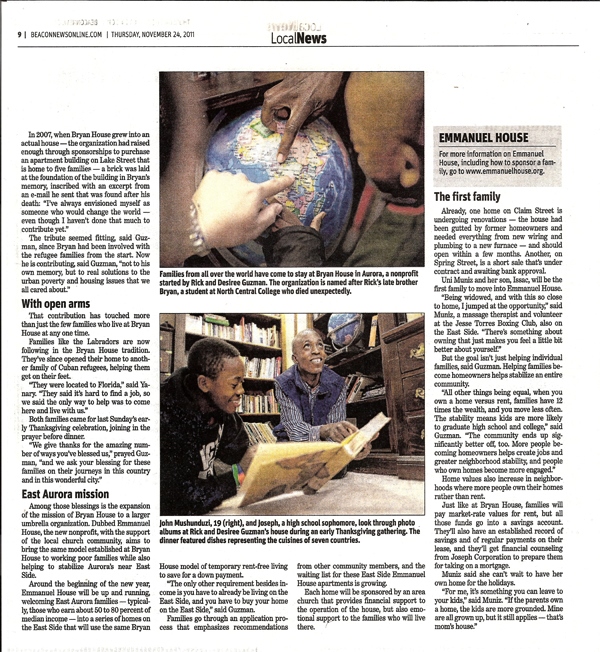
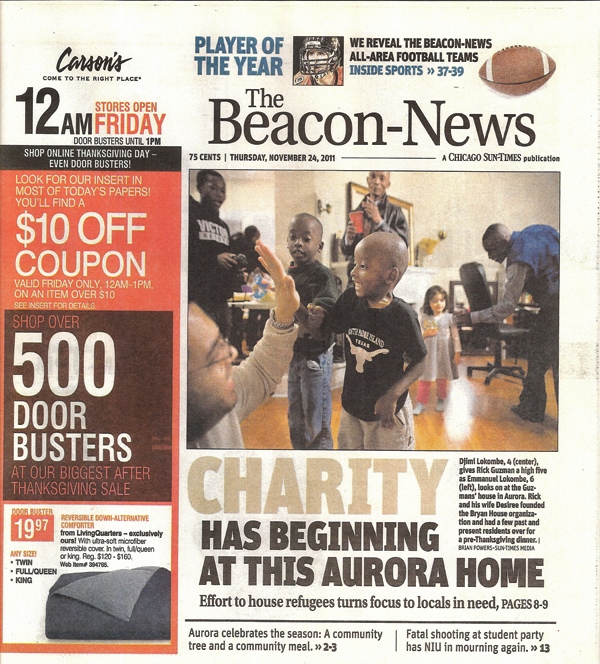
 The Emmanuel House link in the caption above takes you to an article on the SIFE/Enactus garden project.  It contains more links to videos about that project done at an Emmanuel House site.  The picture is a still from a video chronicling Senator Dick Durbin’s visit to that site in 2012.  In 2016 Emmanuel House was named one of the “Top 100” social change organizations in the world.

 Go to the Food Not Lawns website.

Posted in Social Change | Tagged , , , , | Leave a comment