The event described below is part of a series of initiatives of the Anti-Racism Taskforce of the Northern Illinois Conference of the United Methodist Church. See below for details.
The color of concert music is white. Its gender: male. So goes the popular perception. To start a conversation on t.....continued>
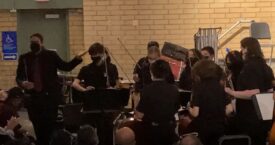
Below is a 3:30-minute video of a small but momentous occasion. My son Aaron—a wonderful musician and talented teacher and conductor—leading the Gage Middle School orchestra, Riverside, California. He’s been teaching there for 20 years and thousands of students. When he first got to Ri.....continued>
We celebrate the Church’s “birth” on Pentecost Sunday, the day the promised Holy Spirit arrived. This year we celebrated on May 20th, a Sunday where at my church—one of the most diverse in America—its large Filipino group took charge of the service. The VIDEO below sh.....continued>
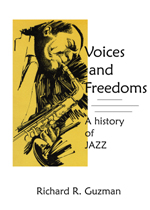
This is the first of 16 short excerpts from my radio series Voices and Freedoms: A History of Jazz. Based on my book of the same name, the series (and book) were produced at the University of Virginia in the nation’s Bicentennial Year. The show, syndicated by the Intercollegiate Broadcasting.....continued>
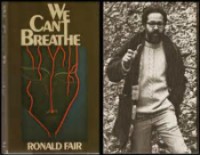
May 2020 Update: Another “I-Can’t-Breathe” incident. I could not watch the video of the police killing of George Floyd in Minneapolis on May 26, 2020. But I heard it while my wife described to me what she was seeing: a police man with his knee on the neck of an already-subdued bl.....continued>
“CBS” (COOL BLACK SICKNESS) a song DAN GUZMAN co-wrote and performs with Brad Hoskins. Fat Cats, Moses in the desert with the Great I Am, bleeding seas, and things tumbling from the sky. Apocalyptic dread. Cool grooves. It not only sounds good—it&#.....continued>
Update: IN APRIL 2018, EMMANUEL HOUSE MERGED WITH LONG-TIME PARTNER ORGANIZATION THE JOSEPH CORPORATION TO BECOME The Neighbor Project. THIS INCREASED THE NUMBER OF FAMILIES SERVED FROM AROUND 25 AT THE TIME OF SENATOR DURBIN’S VISIT TO NOW, IN 2020, A NUMBER APPROACHING 3000. WATCH A VIDEO.....continued>
This list of Black Writers written about on this site provides much faster accessto the posts than clicking on Black Writers in the Categories column to the right. It also gives a much better overviewof available material. It lists writers in alpha order.
Clicking the Categories column to the right gives you the opening of each post and a “Continue reading” link. It shows them three at a time in newest-to-oldest order.
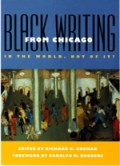
I included most of these writers in my books Black Writing from Chicago and, with David Starkey, Smokestacks and Skyscrapers. The links below take you to introductions based on those included in these books. Most are much expanded, some up to 5 or 10 times the size of the originals. Also, go to “Black Writers Picture Themselves,” a 2-part series featuring self-portraits done by 10 of the writers below.
√ Read the Foreword, the Introduction, and the Afterword to Black Writing from Chicago. The Afterword adds many important names to the ones listed above.
The only child of a prosperous Chicago family, Fenton Johnson (1888-1958) spent most of his time pursuing the arts, and later in editing and journalism. But between 1914 and 1916 he produced three volumes of poetry A Little Dreaming, Visions of the Dusk, and Songs of the Soil, which, together with the posthumous 42 WPA Poems, provide an extraordinary look at the evolution of black American poetry. As such, he deserves to be considered not only one of the most important black American poets, but also one of the earliest stars—along with Harriet Monroe, Hamlin Garland, and Benjamin Franklin Taylor—of Chicago literature.
Fenton Johnson wrote—as many black poets were expected to do—dialect poems like “Questions” (Part Three):
“Whaih’s de sunlight, Mammy Lou?”
“Why Ah thought you allus knew
Dat yo’ hea’t’s de wahm sunlight
An’ you’ love’s de moon o’ night.”
As many black poets were also supposed to do, he wrote formal, antique verse like “A Fragment”:
One sunset when the skies were deepest red,
As if they blushed for all the human sins,
I saw her gather daffodils, and sighed,
For she was sweeter far than those poor flowers…
But though he started tackling more substantial subjects under the inevitable influence of Paul Laurence Dunbar, he then proceeded to “succumb,” as Arna Bontemps put it, “to a more rugged influence.” Dropping all dialect poems and formal poetry in general, he turned to free verse (perhaps under the influence of Whitman—only decidedly without Whitman’s optimism) and began expressing a profound fatalism and despair that stunned America, which had wanted—as it still does—to think of blacks as “happy.” In his poem “The Daily Grind,” for example, Johnson conceives of man as caught between Nature and the System. The first may intend “something fine,” but the human construct—the System—blighted by racism—intends grinding slavery. All man can do is watch the eternal struggle of the two. “If Nature forgets you, / If the System forgets you,” / “God has blest you,” Johnson concludes.
In introductory comments on Johnson in his ground-breaking anthology The Book of American Negro Poetry, James Weldon Johnson says that Fenton Johnson’s startling effect on American poetry, “…was in some degree due to the fact that…[his poetry expressed] an idea so foreign to any philosophy of life the Negro in America had ever preached or practiced. Fenton Johnson is the only Negro poet who has ever sounded this precise note.” His most famous poems in this manner are “Tired” (one of four Johnson poems I included in my Black Writing from Chicago), “The Banjo Player,” and “The Scarlet Woman”—all included in James Weldon Johnson’s enormously influential collection. “The Scarlet Woman” ends with the famous line, “Gin is better than all the water in Lethe.” And “Tired” begins, “I am tired of work; I am tired of building up somebody else’s civilization.” It addresses M’Lissy Jane, saying, “Throw the children into the river; civilization has given us too many. It is better to die than it is to grow up and find out that you are colored.”
But even earlier, in poems like “Prelude,” the first poem in Visions of the Dusk, Fenton Johnson already showed a restlessness with traditional verse and issues a veiled critique of what’s expected of black poets.
And yet some say to me, “O Man of Dusk,
Give us they songs in broken Afric tongue,—
The music of the peasant in the South—
The native strain alone is poetry.
Be thou as Burns or Dunbar was,
Be thou as Lowell in his adobe home;
The humble peasant is the truest bard.”
It was a request from the world of white poetry that Fenton Johnson was finally to deny in spectacular fashion.
♦ This article is the basis of remarks I made at Chicago’s Poetry Foundation upon Fenton Johnson’s induction into the Chicago Literary Hall of Fame, September 2017. Read those remarks HERE, and learn more about the Chicago Literary Hall of Fame.
For me the two coolest instrumentals to ever make the pop charts are “Take Five” by the Dave Brubeck Quartet and “Green Onions” by Booker T and the MG’s. They’ve always been a pair for me, bookends, so I’ve thought a lot about both of them for the past hours upon hearing the news that Dave Brubeck passed away on December 5th, just one day shy of his 92nd birthday.
Jazz, many say, is rooted in the blues, and many jazz greats were also great blues players with an innate sense of blues form and tone. But the bluesiness of “Take Five” comes from Brubeck’s great alto saxist Paul Desmond, not Brubeck himself, who wasn’t a great blues player. “Conscious of how easily the listener can lose his way in a quintuple rhythm, Dave plays a constant vamp figure throughout,” says Steve Race in the liner notes to the famous Time Out album which contained Brubeck’s biggest hit. He doesn’t solo at all on “Take Five.” And when he did solo, his rhythms often got chunky and he tended to hammer away at things. Brubeck leaned not towards the blues but towards that often suspect project of combining jazz and “classical” music. Taught by the likes of Darius Milhaud, Brubeck’s piano forebear is as much—probably more—Chopin as Jelly Roll Morton or any other of the great jazz pianists. That Brubeck became the face of jazz in the 50’s and 60’s, landing on the cover of Time magazine in November 1954, caused chagrin on the part of many jazz officionados—especially those who loved blues. But Americans have always had a problematic relationship with the blues, tangled as that music is in issues of race. We’d rather talk about anything but race, and it took the Brits to help us even begin acknowledging the greatness of our blues heritage.
It’s no wonder, then, that Brubeck’s non-blues jazz took the nation by storm, and it’s fair to say that Brubeck still might be the face of jazz for many Americans. His “experiments” in odd time signatures—though these weren’t as complex as other things going on in jazz, and people never did “lose their way” in the 5/4 lilt of “Take Five”—did refresh the public’s taste for jazz. Also, as it turned out, his sledgehammer piano style formed a perfect counterpoint to Paul Desmond, one of the most fluid, lyrical, floating saxophone players in jazz history. The contrast often proved transcendingly exciting. Brubeck’s Carnegie Hall concert remains one of the great live albums in all jazz.
I love Brubeck. I don’t want all this hemming and hawing to convey otherwise. But my hero was Ray Charles, and as much as I loved “Take Five,” I loved “Green Onions” more because it was closer to Ray Charles’ kind of blues. As a young piano player I tried to play like Ray, but at my high school part of my notoriety was as the guy who could actually play “Take Five”—though I did it in another key because the fingering was easier. Even before my teens, I was a Brubeck fan. One of my strongest musical memories is hearing them at some hall and going up to them afterwards. Paul Desmond was aloof, drummer Joe Morello seemed kind of spaced out, but the person I really wanted to meet was Gene Wright, the bassist. He was black, and I always thought with some relief that at least there was one black face in the greatest jazz band in America. “Gene Wright,” I mumbled as he shook my hand and said, “What’s your name, son?” “Gene Wright,” I said. “What’s that?” he shot back jovially. “Gene Wright,” I said again, then recovering from my reverie, fumbled, “No. No. You’re Gene Wright. My name’s….” But before I finished he had turned away, laughing, tickled by my star-struckedness. I then turned to my right and there was Brubeck. I have yet to shake bigger or softer hands than Brubeck’s. His smile seemed both all-encompassing and directed only at me, and when I told him how much I loved his music, he said, “We’re thrilled that you do.” I knew he meant it. To this day he sets my standard for someone “important” being that approachable and…nice.
Much as I love “Take Five,” though, the Brubeck piece I listen to most—almost once every other week for the past 40 years—is his “There’ll Be No Tomorrow” from his Bossa Nova USA album. Unbelievably beautiful and serious to me, it also summarizes the central strengths of his music and each member of his classic quartet. A middle tempo ballad, it starts with Brubeck hammering out—but with delicate staccato, if that makes sense—the haunting melody before Paul Desmond delivers one of his most beautiful solos. Joe Morello uses brushes throughout, swirling and tapping accents as Gene Wright anchors everyone onto his deep bass foundation. At 2:20 into the piece Brubeck softly plays a dissonant chord into a silent space in Desmond’s solo. My wife thinks I’m such a nerd for waiting so reverently for this moment and reacting so strongly when it comes and goes. Then it’s Brubeck’s turn to solo. He begins gently enough, but, of course, he’s soon hammering away, though he’s spreading out the melody and deconstructing the tune’s chord structure beautifully. Then shades of his classicism enter. Morello drops out, and Brubeck continues with only Gene Wright’s deep notes guiding him as he slows down the pace more, then more. Then as Wright drops out Brubeck begins to go as liquid as Desmond. “Most jazz ballads owe a debt to Chopin, another influence from outside jazz that has become deeply entrenched in its language,” Brubeck himself writes in the liner notes to Bossa Nova USA (1963). Now he’s flowing in his own way, where he’s most at home, creating something as beautiful, to my own mind, as anything Chopin ever did. Over smoothly rippling eighth-note arpeggios in his left hand, the tune’s melody sings once again, interspersed with 32nd-note arpeggios, sparkling and precise. The music rides to a quiet, profound end, for me the very definition of how sadness, beauty, and hope entwine.
But enough words, almost.
I’m ending this post with an excerpt from “There’ll Be No Tomorrow” to give you a brief taste of what I was trying to describe. Click the video button below and enjoy. Then I invite you to hear my jazz trio. I’m around 17, so this recording is like 45 years old! My piano influences are mainly people like Ray Charles, as I said, and Ahmad Jamal, but here, while Jamal peeps through, it’s almost 100% Brubeck—at least a 17-year-old’s poor, halting tribute to one of his musical idols.



 This list of Black Writers written about on this site provides much faster access to the posts than clicking on Black Writers in the Categories column to the right. It also gives a much better overview of available material. It lists writers in alpha order.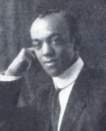

Un-Blue Jazz: Remembering Dave Brubeck
Jazz, many say, is rooted in the blues, and many jazz greats were also great blues players with an innate sense of blues form and tone. But the bluesiness of “Take Five” comes from Brubeck’s great alto saxist Paul Desmond, not Brubeck himself, who wasn’t a great blues player. “Conscious of how easily the listener can lose his way in a quintuple rhythm, Dave plays a constant vamp figure throughout,” says Steve Race in the liner notes to the famous Time Out album which contained Brubeck’s biggest hit. He doesn’t solo at all on “Take Five.” And when he did solo, his rhythms often got chunky and he tended to hammer away at things. Brubeck leaned not towards the blues but towards that often suspect project of combining jazz and “classical” music. Taught by the likes of Darius Milhaud, Brubeck’s piano forebear is as much—probably more—Chopin as Jelly Roll Morton or any other of the great jazz pianists. That Brubeck became the face of jazz in the 50’s and 60’s, landing on the cover of Time magazine in November 1954, caused chagrin on the part of many jazz officionados—especially those who loved blues. But Americans have always had a problematic relationship with the blues, tangled as that music is in issues of race. We’d rather talk about anything but race, and it took the Brits to help us even begin acknowledging the greatness of our blues heritage.
It’s no wonder, then, that Brubeck’s non-blues jazz took the nation by storm, and it’s fair to say that Brubeck still might be the face of jazz for many Americans. His “experiments” in odd time signatures—though these weren’t as complex as other things going on in jazz, and people never did “lose their way” in the 5/4 lilt of “Take Five”—did refresh the public’s taste for jazz. Also, as it turned out, his sledgehammer piano style formed a perfect counterpoint to Paul Desmond, one of the most fluid, lyrical, floating saxophone players in jazz history. The contrast often proved transcendingly exciting. Brubeck’s Carnegie Hall concert remains one of the great live albums in all jazz.
Much as I love “Take Five,” though, the Brubeck piece I listen to most—almost once every other week for the past 40 years—is his “There’ll Be No Tomorrow” from his Bossa Nova USA album. Unbelievably beautiful and serious to me, it also summarizes the central strengths of his music and each member of his classic quartet. A middle tempo ballad, it starts with Brubeck hammering out—but with delicate staccato, if that makes sense—the haunting melody before Paul Desmond delivers one of his most beautiful solos. Joe Morello uses brushes throughout, swirling and tapping accents as Gene Wright anchors everyone onto his deep bass foundation. At 2:20 into the piece Brubeck softly plays a dissonant chord into a silent space in Desmond’s solo. My wife thinks I’m such a nerd for waiting so reverently for this moment and reacting so strongly when it comes and goes. Then it’s Brubeck’s turn to solo. He begins gently enough, but, of course, he’s soon hammering away, though he’s spreading out the melody and deconstructing the tune’s chord structure beautifully. Then shades of his classicism enter. Morello drops out, and Brubeck continues with only Gene Wright’s deep notes guiding him as he slows down the pace more, then more. Then as Wright drops out Brubeck begins to go as liquid as Desmond. “Most jazz ballads owe a debt to Chopin, another influence from outside jazz that has become deeply entrenched in its language,” Brubeck himself writes in the liner notes to Bossa Nova USA (1963). Now he’s flowing in his own way, where he’s most at home, creating something as beautiful, to my own mind, as anything Chopin ever did. Over smoothly rippling eighth-note arpeggios in his left hand, the tune’s melody sings once again, interspersed with 32nd-note arpeggios, sparkling and precise. The music rides to a quiet, profound end, for me the very definition of how sadness, beauty, and hope entwine.
But enough words, almost.
I’m ending this post with an excerpt from “There’ll Be No Tomorrow” to give you a brief taste of what I was trying to describe. Click the video button below and enjoy. Then I invite you to hear my jazz trio. I’m around 17, so this recording is like 45 years old! My piano influences are mainly people like Ray Charles, as I said, and Ahmad Jamal, but here, while Jamal peeps through, it’s almost 100% Brubeck—at least a 17-year-old’s poor, halting tribute to one of his musical idols.