

Whales, and An Ethic for the Age of AI

The graphic for Addrienne LaFrance’s Atlantic article.

Below is a 3:48 highlights VIDEO of a recent trip my wife and I took to Cabo San Lucas, specifically to watch whales.  We were not disappointed.  But aside from the Video, this commentary isn’t really about whales.  It’s my take on Adrienne LaFrance’s article in the July/August 2023 Atlantic titled “In Defense of Humanity.” As the subheading says, “We need a cultural and philosophical movement to meet the rise of artificial superintelligence.”  It’s more nuanced and sophisticated than my summary, so I’d urge you to read it for yourself.  It’s not long.  It amounts to four points from which a possible ethics for the age of AI could arise.  Whales are an illustration of Point Four below.

1.  TRANSPARENCY:  If you’ve used AI to create anything, just tell us you did. Writers like Ayad Akhtar, who won a 2013 Pulitzer for his play Disgraced, are already openly making AI a part of their writing process, as are many visual artists. As a former writing professor, I would just ask students if they used AI and have them describe their process of using it at the end of their papers. A law or an ethic of transparency would do much to warn consumers about AI-generated pictures purporting to be of someone doing this or that, including posing naked.  Short of banning such pictures or hunting down and prosecuting each offender—which would be the best solution, of course—a statement saying something like “AI was used to generate this image,” or “this sound,” would give consumers important information and afford victims some semblance of protection from the beginning.  This point is related to Point Three below.

2.  PERSONAL CONNECTION:  How convenient to meet on Zoom.  Yet this should not take away from meeting in person, face-to-face. Live, personal contact should be seen as a necessity. This point is related to Point Four below.

3.  PRIVACY:  LeFrance says, “privacy is the key to preserving our humanity.” On a personal level, this means learning that you don’t have to share everything you’ve ever done or thought.  This calls for a measure of modesty, a growing sense of your inner vs. public self, and for a careful drawing of lines that will protect you and those closest to you from outside intrusion.

4.  PERSONAL WITNESSING:  Whenever possible, go see things for yourself and through your own eyes.  Do not rely on a virtual reality tour of Rome, but go there yourself.  Which brings me back to the Video below.  How long I’ve wanted to actually see whales in the wild. I watched films, including one of my oldest son’s family going whale watching in kayaks and having a humpback surface no more than 10 feet from them. So during one of the coldest days in 2025’s Chicagoland winter, we were able to fly off to Cabo San Lucas and experience what the Video below shows.  What a privilege.  And how privileged was I. Not everyone can do that, or actually step onto Vatican Square in Rome, as I was also able to do many years ago, but the more you can see with, and through, your own eyes, with no intervening technology, the better.  Actually see your neighborhood, your backyard, the people closest to you, and even those who are strangers.

For the Video below, I tried very hard not to watch through the lens of my phone’s camera, but just point the phone in the general direction I was looking.  I was thrilled that I managed to capture a lot of what I saw with my own eyes.  There were the breaches, the waving fins, the lifted tails gliding gracefully back down under the water, the simple arching of the backs so close to us.  Most of all, as we headed back to dock, the captain of our little rubber boat spotted a mother whale teaching her calf to slap its tail down, smacking the water to say, Hello, I’m Here to other whales, or to say, Stay Away to predators, as well as a host of other essential things.  The calf tried but was only weakly successful at first.  It also breached instead of showing the mother he was trying to master the lesson. The mother seemed to remain unimpressed by this and continued smacking her tail down with both grace and splashiness until the calf caught on and smacked his tail.  It was far less graceful, far less splashy, but soon they both swam off with a lesson just beginning to be learned.

Posted in Music & Media Podcasts, Reviews & Commentary | Tagged , , , | Leave a comment

Elitism and Elections

The Atlantic is a magazine I think everyone should read, even though its analyses are often shot through with a kind of elitism it has often critiqued itself.  For example, the cover of one of its 2018 issues (at left) highlights its reporting on America’s growing aristocracy, which creates a “gilded future for the top 10 percent, and the loss of opportunity for everyone else.”  The January 2025 issue contains four essays on the 2024 election. They’re brilliant and need to be taken seriously.  But they also suffer from an elitism that clouds their reaction to some of the major reasons Donald Trump won, partly because of stunning gains among groups of people—the young, women, people of color—you wouldn’t have thought would vote Trump in such numbers.

George Packer’s “The End of Democratic Delusions” explores the Democrats’ misunderstanding of Identity Politics.  Just because you’re a person of color doesn’t mean you’ll always vote Democratic, etc.  Sophie Gilbert’s “The Gender War Is Here” focuses on—well, gender—though it struck me as somewhat schizophrenic, saying, on the one hand that this is going to happen to women, but that women don’t have to let these things happen to them.  It ends: “He won’t ruin women, but he will absolutely destroy a generation of men who take his vile messaging to heart.”  David Frum explores the new administration’s foreign policy, especially the threatened tariffs.  And Helen Lewis explores the Joe Rogan phenomenon, a testament to the power of new media and the continuing power of maleness.  I’d call it “patriarchy,” but part of my point here is to steer away, for a moment at least, from what many perceive to be “elitist language.”

These pieces all focused by and large on deep, underlying issues.  But in one of his many post-election interviews, Trump said, “I won this election because of one word: ‘groceries.’”  Not one of the Atlantic analyses mentioned groceries.  When, during the campaign, I got texts from James Carville asking for money to bolster the Harris-Walz campaign, I couldn’t help but think: Are you kidding? You invented the phrase, “It’s the economy, stupid!”  It’s groceries.

Not to say that groceries is less deep than misunderstanding identity politics.  Abraham Mazlow’s popular Self-Actualization Pyramid puts “Physiological Needs” and “Safety Needs” at the bottom of a pyramid which puts “Self-Actualization” needs at the very top.  Perhaps the pyramid should be turned on its head, or perhaps it shouldn’t be a pyramid at all but a circle. Elites tend to take Self-Actualization more seriously than groceries.  And they also tend to forget that Trump’s appeal in fact goes well beyond groceries: that abortion continues to divide the nation, that a kind of cultural trendiness has crept into LGBTQ issues that alarms many people (even in the LGBTQ community itself), that many of us rail against government inefficiency all the time. Etc.  The biggest disconnect in all this for me is that despite being so against the cultural elite, MAGA nation seems not to rail much against the economic elite, which so many of its members definitely are not part of.  The growing wealth gap in our nation is one of those deep things that needs attention.  That may be too much of an elitist concern for the moment, but it seems to me closer to groceries than self-actualization. It’s also true that it’s harder to draw a direct correlation between billionaires and groceries.

There’s also a fifth essay in the January 2025 issue appearing about one-third of the way through.  It has nothing directly to do with the election but might have been included by design anyway.  It’s Caitlin Flanagan’s lovely tribute to her parents and to the great Nobel Laureate Irish poet Seamus Heaney.  Its title comes from one of Heaney’s most famous lines: “Walk on air against your better judgment,” which is an invitation to hope even though hope itself seems to go against your better judgment.  She says Seamus Heaney “didn’t believe in a force as mere as optimism.  He believed in hope, “something far greater and more powerful.” She also quotes lines from his The Cure at Troy, which is a good way to end this commentary on the election as so many people on both sides of our stark divisions look out on what they believe is a terrible, almost apocalyptic, future.

So hope for a great sea-change
On this side of revenge.
Believe that a further shore

Is reachable from here.
Believe in miracles
And cures and healing wells.

Posted in Reviews & Commentary | Tagged , , | Leave a comment

Subterranean Fun

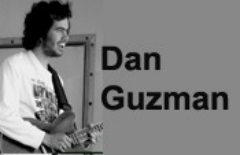
Vana Liya’s shows remain flowing and gently strong, but they’re getting more fun, too, as witnessed in the VIDEO below of her October 2024 show at The Subterranean in Chicago, her second in the city this year.  The video captures 8-minutes of the fun, beginning with her signature song “Gold.” Everything moves along, probably as it has concert after concert, but when it comes time for Daniel and Derek (aka Man of the Forest) to do their neat solos in harmony, Daniel suddenly flips the guitar over his head and plays it upside down as it rests on his shoulders.

The first time I experienced this live was when I was in high school and directed the year’s talent show.  A band—Sato and the Mellotones, I think—were auditioning and were really good.  They were going to make it.  But halfway through their song the guitarist flips his guitar over his head, at which my assistant director, Phil Brooks, jumped up and shouted, “No! No! That cheapens your act!”  I didn’t agree, and neither did Sato, who said, stunned, almost pleading, “But he’s got to do that because next he picks it with his teeth.”

Well, Daniel stopped short of that, thankfully, but it was good to see him having fun on stage.  I think he’s a great guitarist, and I still point people to this YouTube Video of him playing “Way Down Low” at the Stork Club in Oakland, California, as a prime example of someone building a beautiful, improvised solo.  It’s brilliant.  And he’s played brilliantly for a long time, but early on he seemed shy, almost stepping out of the spotlight sometimes when he played.  Being in Vana Liya’s band has made him more of a showman, perhaps a secondary concern in music, but still a crucially important part of making live music spark.

Vana Liya and the band were second on the bill to KBong and Johnny Cosmic, and things really start sparking when KBong himself comes out to finish off Vana’s “Feeling Good.”  “It all started with him.”  She says something like that because it was KBong who took her on her first tour many years ago, and why, when she’s doing “Feeling Good” on the acoustic Sugar Shack Sessions, she says, “Shout out to my boy KBong.”  So behind the good fun there was a long history of togetherness, something that adds to the fun a deep joy.

Go HERE for more of Dan Guzman’s music, as well as music from others in our family.

Posted in Music & Meaning, Music & Media Podcasts | Tagged , , , , | Leave a comment