

Introduction to Black Writing from Chicago – Part 1

Cover for Black Writing from ChicagoNote:  I have divided my nearly-3500 word introduction to my book Black Writing from Chicago into two parts for this website.  Part 1 begins with a quote from Gwendolyn Brooks about her objection to the term “African-American.”  It’s my justification for not calling the book “African American Writing from Chicago,” a title some had suggested as more “proper.”  Below I explain how Chicago writing fits into the standard literary periods scholars use to talk about Black writing, but I focus most on the character of Black writing that has come from Chicago, and on explaining my rather odd subtitle—a question: “In the World, Not of It?”  It ends with a statement about the centrality of Chicago, especially Bronzeville, to Black writing around the world, a theme I detail later.  When the book came out one critic noted that at last we had a book that firmly established Chicago as a counterpart of the Harlem Renaissance.  I post this Introduction in mid-2015, in the wake of racism’s effects in Ferguson, Long Island, Milwaukee, Cleveland, Baltimore, Charleston, etc. etc. etc.  From this perspective, as well as sheer literary merit, it seems to me that Chicago’s Black writing is more relevant today than ever.

  Read PART 2 of the Introduction and go to a list of Black Writers, most of them from this book.

____________________________

Gwendolyn BrooksThis objection of mine to the designation African-American is not popular.  Nevertheless!  The phrase is ISLANDING.  The phrase is limiting.  The phrase is weak…Almost a honeyed music: AF-ri-can A-MER-i-can.  (As opposed to B-L-A-C-K !  Which comes right out to meet you, eye to eye.)  —Gwendolyn Brooks,  Report from Part Two

As might be expected, the writing collected here is sometimes less refined.  It’s Chicago writing.  Instead, it’s “more.”  Describing the daring of the city’s Black writing, Hoyt W. Fuller said it was like Ray Charles’ music: more gritty, more blunt and aggressive, more raw and free-wheeling than most American writing.1  Some of it is more hopeful—Era Bell Thompson’s writing, for example.  But Fenton Johnson, one of the city’s earliest literary stars, expressed more despair and more fatalism than any Black writer ever had.  He stunned turn-of-the-century America, just as Chicago, the “City of the Century,” stunned America with an explosive growth and grinding materialism which always threatened to crush the human spirit.  The arts, too, had to struggle harder, get scrappier, grittier, and when artists survived they expressed more triumph, and sometimes more sentimentality, than elsewhere.

Fenton Johnson

Fenton Johnson

Race added that much more to the struggle.  In part, this collection attempts to follow the complex, often clashing, currents of a crucial race theme.  My subtitle turns a phrase of Jesus into a question.  His followers, he said, were certainly in the world, but were not to be of it, were not to be “worldly.”   It has always been a pivotal question for Black Americans:  the extent to which they could be, should be, or should want to be part of the world of American culture and society at large. On the one hand, Black culture has contributed in incredible disproportion to what makes the United States so distinctive culturally, politically, spiritually.    It has made the U.S. what it is to such an extent that every American could be said to be one-third Black at the very least.  Why wouldn’t Blacks want to be integrated into something they have so largely made?  Racism blocked this, of course.  And it is obvious that American culture has always manipulated Black culture, swallowed it, commodified it, profited from it, while shutting Black people out.  Because of this, separatism and integration become opposite poles of a continual spectrum of tension which has played out more powerfully in Chicago than virtually anywhere else.

Rather humble appeals to “play fair” and let Blacks be fully part of America characterize much of the rhetoric of the earliest pieces in this collection, pieces an academic might place in the so-called “Antebellum” period of Black writing in America (1800-1865).2   These give way to more aggressive appeals to reason in the “Reconstruction” period (1865-1900).   But after the forging of distinctly Black styles in the “Negro Renaissance” (1900-1940), the “Protest” period (1940-1959) and the “Black Arts Movement” (the 1960’s), Black writing almost obsessively foregrounds the question of assimilation—of how much Blacks should ever want to be part of a larger society that continued to mistreat them.  The answer, shouted in Chicago probably louder than anywhere else, was often: Not much, Not in any way if it can be helped.  In Chicago from the 60’s to the 80’s, the Organization of Black American Culture, OBAC, was a megaphone for this shout, as well as a major world site for the ferment of Black styles and themes.

FullerIn his seminal 1970 essay “The New Black Literature: Protest or Affirmation,” Hoyt W. Fuller wrote: “The trouble with black literature in America is—and always has been—the white literary establishment.”  “Even James Baldwin,” he continues, “…bought the assimilationist philosophy and proceeded to launch a brilliant literary attack against the works of Richard Wright in particular and all ‘protest’ literature in general.  He lived to regret it.”3   Indeed, shortly after such “assimilationist” attacks, Baldwin began articulating a kind of reverse assimiliation, saying that Blacks needed to forget about integrating with whites.  Whites, in fact, needed to integrate into Blackness.4   Ralph Ellison voiced it another way, saying it was time for whites to ask how Black they were, instead of Blacks always having to struggle with being absorbed into whiteness.5   These attempts to see assimiliation in reverse is one of many strategies that map a hazy middle ground between a separatist and an integrationist Black ideology.

Haki MadhubutiMany of the pieces in this collection can be heard talking to each other along this separatist-integrationist spectrum.  Some writing focuses on figures who have become icons of that hazy middle ground: Colin Powell, for example—or, more intriguingly, Josephine Baker, who held herself at such a distance from white America even as much of the white world here and elsewhere idolized her.  The Intercollegiate Wonder Book can be seen as a handbook for Blacks who want to step fully into American society, while Haki Madhubuti’s Black Men: Obsolete, Single Dangerous? can be seen as a handbook for separatist Blacks, just as his Third World Press championed business, writing, and education by Blacks for Blacks.

The flows across this spectrum are complex.  The Chicago Defender newspaper manifested a radicalism that demanded full equality and, perhaps, integration.  Yet its habit of referring to African Americans not as “Blacks” or “Negroes” but as “The Race” maintained a strong separatism.  In contrast, the writing coming from Chicago’s Johnson Publishing moved clearly towards an integrationist ethic, not only in the way its Negro Digest was styled largely after Readers Digest, or Ebony magazine after Life magazine, but also in its increasing championing of less radical, middleclass values.  Yet the content of Negro Digest and Ebony was often very radical, particularly when Hoyt W. Fuller himself worked for Johnson.  However, as the excerpt included here makes plain, Fuller’s break with Johnson was largely over the more middleclass direction of Ebony, along with Fuller’s empathy for Palestinians.  A clearer case of contrast would be Johnson protégé Era Bell Thompson whose sunny optimism stands in contrast to Richard Wright’s pessimism, just as her American Daughter was deliberately named to stand in contrast to Wright’s Native Son.  Yet here, too, Wright cannot be said to be wholly separatist, only hyper-conscious of the difficulties of integration at any level.

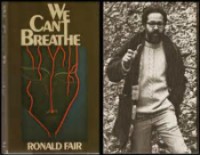
Ronald L. Fair: We Can't BreatheIt often comes down to attitudes about middleclassness.  That theme runs through selections from Sam Greenlee and many others.  Hoyt W. Fuller and Ronald L. Fair excoriate the Black middle class while Dempsey J. Travis, Leonidas Berry, and others hold it up.  The controversy continually flares, in recent times most famously over Bill Cosby’s May 2004 “lectures” on the problems of Black youth.  A 2005 ABC Nightline special on the controversy featured Shelby Steele touting individual responsibility and initiative as the key to full opportunity in American society.  But Michael Eric Dyson said it was disingenuous to  put the burden so squarely on “the poor.”  Not only is the problem more systemic, he said, but the Black middleclass who abandon their brothers and sisters is even more to blame.6  In this book, perhaps the most interesting formulation of the tension occurs when Barack Obama notes a church brochure which says it is all right to seek “middle-incomeness” but not middleclassness.  The emotional center of this book, however, is Leanita McClain’s writing.  To read her pieces—and Rohan Preston’s poem which alludes to her suicide—is to understand how the question of middleclassness can victimize, how she, like many others, can careen from one end of the integration-separation spectrum to the other.

The story by Cyrus Colter shows that the degree to which one embraces the world also depends on the subtleties of personal relationships and the interior landscapes of regret and fear related to, but also beyond, race and class.  For Gwendolyn Brooks I chose not more readily available classics like “The Chicago Defender Sends a Reporter to Little Rock,” which would have closely reflected her contributions to the Protest phase of Black writing, but pieces which also show how very personal choices shape our decision to be less “of the world,” as Maud Martha decides.  Then again, her wonderful poems to Haki Madhubuti (then Don L. Lee) and Walter Bradford reflect, successively, a delight in a certain kind of “being in the world,” and a determination to “Stay” and not to be beaten down by it.  As I have said, the flows across the spectrum of this theme are extraordinarily complex.

Elizabeth AlexanderSo too is the reality of cultural flow which has made Chicago such a central site of Black writing in America, a site flowed to and criss-crossed over and over by thousands of migrants, and by the words, images, spirits, and bodies of the greatest Black artists in the U.S. and the world.  Some writers included here, like Charles Johnson and Elizabeth Alexander, have moved on from Chicago.  Can we call them Chicago writers?  I looked for a certain tone, such as I alluded to in the first paragraph of this introduction, but also for significance of time spent and works published.  In Alexander’s case, for example, I included poems from Body of Life, published in Chicago by Tia Chucha press.  But the reverse scenario is much, much more the case: why not call more Black writers Chicago writers?   Arna Bontemps, Langston Hughes, Jean Toomer, Chester Himes, Margaret Walker, Carter G. Woodson, James Alan McPherson, even Harlem’s James Baldwin—it was tempting to claim these and many, many others as “Chicago writers,” so central was the site of Chicago to their careers.  For example, Baldwin’s titantic struggle with the father figure brought him to Chicago to seek out Elijah Muhammad, a story he told first in The Fire Next Time; and one of McPherson’s first big writing breaks came when the Atlantic Monthly published his pieces on Chicago’s Blackstone Rangers.  For example, perhaps the biggest of them all, Margaret Walker, claimed proudly by Louisiana, wrote For My People, her most famous work and winner of the Yale Younger Poets Prize, while she was with the Federal Writer’s Project in Chicago and participated as a key figure on the Chicago writing scene.

Bronzeville: Black Chicago in PicturesIt has become common to acknowledge a Chicago Renaissance (1932 to 1950) flowing across the traditional line between the Negro Renaissance and the Protest Movement mentioned earlier.  This renaissance was led by individuals like Richard Wright and Gwendolyn Brooks, but perhaps as much by a powerful community, Bronzeville, a site stretching seven miles from 22nd to 63rd Streets between Wentworth and Cottage Grove.  The home of Elijah Muhammad, leader of the Nation of Islam, of Johnson Publishing and the Chicago Defender (initially at least), of Brooks and many other writers, and of such luminaries as Joe Louis and Mahalia Jackson, Bronzeville supplanted Harlem as the center of Black culture in American during the 40’s.

 Read PART 2 of the Introduction and go to the Teaching Diversity main page.
Posted in Black Writers, Chicago Writing | Tagged , | Leave a comment

Count Your Blessings

Nedra-Akk3The song and video below is in memory of three friends: Nedra Groggins-Sage, Ahkkmand Sage, and Mike Feldmann.  About 10 years ago Nedra put together a band for Friendship United Methodist Church and hired Dan Guzman as lead guitarist.  Linda and I followed Daniel there to hear the music and just stayed.  I got to play lots of keyboard for this extraordinary group of musicians.

“Count Your Blessings” (below) shows us at one of our peaks.  It’s pretty good—especially considering that this is a first take, I had never played the song with them before, and our regular bassist, Leonard Jones, had his arm in a sling, so recording engineer Dan Ryan had to step in.  We talked maybe 2-3 minutes about what we should do, then Mr. Ryan turned on the mics, picked up a bass, and away we went, tearing through the story of old Job.

That story has caused countless thoughts on the nature of suffering, the role of God in it, and how we should respond to these mysteries.  I think of the band often, of all the turmoil and suffering of its members.  Maybe that’s why we rode the song so joyfully and brought to this first and only take such detailed, flowing music.  Mistakes, sure, but on the whole everyone worked so hand-in-glove.  My favorite part is the fade-out at the end where Daniel hits a beautiful bluesy note, and I respond with a blues vamp, an instant transformation of a similar one I’d been using throughout the song.  You had to have played years together for that to happen, and Daniel and I had.  It’s one of my most beautiful memories of playing with my boys.

Mike FeldmanAnd now Nedra and husband Akkhmand are gone.  And Mike Feldmann, too.  He moved years ago, but in early July Daniel brought the shocking news that Mike, always so fit, had died suddenly earlier this year.  If anyone played perfectly on this song, it was Mike.  That’s him in your right speaker, with a delicate rhythm guitar that’s rock-solid on.  He was also the band’s gear head, and set Daniel up with his first great guitar, amps, and speakers.

The original video was done before I’d learned about Mike, so I re-did it, adding a memory page for him.  It started mainly as a tribute to Nedra, though she doesn’t take the lead vocal, but contributes the alto harmonies behind the voice of Theresa Huberty, who’s family actually toured with the famous Gaither Singers.   I guess that partially explains the soaring beauty of Theresa’s voice.  Because Nedra’s not in the lead, I saw this video as the band singing to her…and now to Mike, too.

Hear more music on this site, especially Dan Guzman’s.
Hear a sermon of mine, “Sacred Doing,” where you’ll also find links to other talks.

Posted in Faith, Music & Media Podcasts | Tagged , , , , | Leave a comment

The Empty Center and the International Style – Part 2

This is Part 2 of a talk I gave in Scottsdale, Arizona, for the Asian Studies Development Programs’ 9th Annual National Conference in 2003.  It deals with the efforts of “Third World” writers to develop a “national culture.”  READ PART 1, where I introduce and begin analyzing stories from three Filipino writers.  Part 1 also identified “magical realism” as the new “international style,” but here we delve further into how an empty center can aid the project of any hybridity, whether the strange blend of magic and realism or something else one fashions, perhaps in the moment, while travelling a world set in dizzying motion by globalization.

The first major statement about the need for Third World writers to develop their own way of expression came in Raja Rao’s 1937 preface to Kantaphura, his groundbreaking novel about the Indian revolution.  “English is not really an alien language to us,” he wrote:

“It is the language or our intellectual make-up–like Sanskrit or Persian was before–but not our emotional make-up…We cannot write like the English.  We should not.  We cannot write only as Indians.  We have grown to look at the large world as a part of us.  Our method of expression therefore has to be a dialect which will someday prove to be as distinctive and colorful as the Irish or American.  Time alone will justify it.

Raja Rao

Raja Rao

“After language the next problem is that of style.  The tempo of Indian life must be infused into our English expression…We, in India, think quickly, and when we move we move quickly.  There must be something in the sun of India that makes us rush and tumble and run on…The Mahabharata has 214,788 verses and the Ramayana 48,000…Episode follows episode, and when our thoughts stop our breath stops, and we move on to another thought.  This was and still is the ordinary style of our storytelling.”

I believe there is still much merit in exploring the relationship between an author’s individual style and the clarity of his or her conception of their country’s cultural identity.  With Chinua Achebe, for example, we find a style tending towards traditional Western realism coupled with the theme of native cultural identity falling apart.  In Amos Tutuola, a fellow Nigerian, we certainly see native life falling apart, but his vision of Nigerian and African identity is so solidly based on traditional folk elements that his style itself becomes distinctively African, and a precursor, I might add, to the “international style” I have tried to define above.

Of all Indian writers, I believe Raja Rao most profoundly created a distinctive English, and I believe there is a strong relationship between his stylistic creations and his remarkably strong sense of Indian culture rooted in the Vedas and the concept of Mother India.  Over the years I have come to think that while these larger considerations are certainly important, we should also think just as much about the individual writer’s “talent,” what he or she has read, how he or she hears the language, etc., and that this should temper our generalizations about groups of writers.  This should be kept in mind as I come towards my conclusion.

I began with the idea that of all Third World writers, Filipinos had the hardest time defining a clearly Filipino cultural identity—so much so that I used the term “empty center,” and traced how increasingly empty that center became through a series of three short stories by prominent Filipino writers.  Stylistically, I can say that on the whole, while Filipino writers have produced some of the finest writing in English in the Third World, they also have not produced a writer as distinctively Filipino in style as, say, India has produced in someone like Raja Rao, whose English is profoundly, distinctively Indian.

The one exception to this may be N.V.M. Gonzalez, who, shortly before his recent death, was named a Philippine National Artist.  I have wondered a great deal how much his individual ear had to do with his distinctive style, but it also seems like no coincidence that of all Filipino writers, he was most sure of a distinctive Filipino cultural center, one rooted in folk tale, and pre-colonial peasant culture.  Nearly 30 years ago I received a letter from him containing the sentence:  “I’ve been reading history and a whole ton of it lately, and I can say with some assurance that the Filipino has not changed substantially since circa 1400!”

NVM Gonzalez

NVM Gonzalez (1915-1999)

Gonzalez style contained few of the elements I have described as being part of a so-called new “international style,” but his style was the most distinctively Filipino of any writer I knew.  The simple sentences that anchored Bulosan’s style seemed to come as much from Hemingway as from the simple minds of farm laborers like Magno Rubio whom Bulosan often portrayed.  Perhaps Ben Santos’ style seemed to fit standard American story-telling style so well because so many of his key stories took place in the United States, but so did many of Gonzalez’s.  There is a smoothness and ease of idiom with Santos, however, that is lacking in Gonzalez’s stories, where often, especially when he is trying to use slang, there’s an almost second-language kind of  awkwardness.  It is this awkwardness that has led me to ask how much is due to the writer’s ear, how he hears the language, and how much to the larger issues of the relationship of writers to some perceived or conceived cultural identity.  Ben Santos’ wonderful writing is, in short, perhaps too Americanized in style—a style which carries stories of cultural loss and devastation.  Gonzalez every now and then would mention how so many Filipino writers—Santos included—had given in to cultural despair, and one wonders to what degree being so adept at the “King’s English,” so to speak, is related to this despair, this sense of a lost Filipino cultural identity.

NVM Gonzalez The Bread of SaltGonzalez’s style, though awkward in many places compared to Bulosan’s, Santos’, and Hagedorn’s, nevertheless is beautiful and feels “more Filipino.”  This is obviously so when he is writing about Filipino peasants in the cycle of harvest in the Philippines, for example, but also so when he writes about Filipinos in the United States.  Take this passage chosen at random from the short story “The Tomato Game,” which has appeared in many places, including his story collection The Bread of Salt.  “I saw Sopi in the mirror of my prejudices.  He was thin but spry, and he affected rather successfully the groovy appearance of a professional, accepted well enough in the community and, at that, with deserved sympathy.”  It’s the word “groovy” following the word “affected;” the way the “at that” breaks the sentence’s rhythm in not quite the right place.  As much as this surely reflects his ear, when one looks at his work as a whole one realizes that it also reflects consciously a Filipino rhythm based in the cycles of planting and harvest, of landfall and sea-faring, colonized outsider longing for something like inside status, that clashes with the rhythm of a society he never will quite understand or be a part of.  Or a language he feels the same way about.  Gonzalez has said that adopting English, while it created a kind of larger cultural consciousness for Filipinos, also marked the downfall of their literary/cultural sensibilities.

Hanunoo Music from the PhilippinesYet for all this he was not a pessimistic artist.  Though he never adopted what I have referred to as the “international style,” he saw the way there, and almost gave permission to other Filipino writers to conceive of themselves more broadly not as tied to a specific Filipino locale, but as being set loose in a new, international, globalized world.  In his essay “Kalutang: A Filipino in the World,” his image of himself, and of what the Filipino artist could be, is of the tribal Hanunoo peasant walking through the forrest playing two sticks, the kalutang.  “The song helps the soul know where the body is,” he writes.  And the kalutang may take many forms—even, as it does at the essay’s close, a KLH portable player on which Gonzalez plays a tape of a Hanunoo playing the kalutang, because, as he says, “Who knows where I’ll be tomorrow.”  The point is that the Filipino artist can be conceived as a Hanunoo, now wandering not a Filipino forrest but the world at large.  “Perhaps,” says Gonzalez, “through his artistic effort the Filipino can contribute to the dialog of cultures now going on all over the world.”

For this job having an “empty center” at the heart of one’s cultural identity may not be all that bad.  As the deconstructionists have told us for 50 years, conceiving a stable center is folly anyway, an attempt to still the play of language and meaning, something which cannot really be done.  As he often did, Gonzalez suggests ways to turn a perceived cultural liability into an asset.  At this point we can suggest that not having an “authentic” Filipino style based on a stable cultural identity may not necessarily be something to worry that much about.  Being protean, malleable, unafraid of a multitude of masks may be much more important.  Thus the successful mastery of Hemingway’s stylistics, “standard” American story-telling rhythms, or even something like what appears to be a growing sense of an “international style” is not necessarily a sign of the inauthentic.  As Mira Nair and others have told us for many years, “authenticity” is itself a kind of racist trap.  One needs two sticks to strike together musically, some kind of kalutang song to help the soul keep track of the body, but not to center it.  Instead it merely provides a song against which we trace the many forms, many styles we will take on, and, as it turns out, the Filipino writer has been doing this probably longer than any other group of writers.  It’s just that they were worrying about that “empty center” too much.  They had not realized what an asset it was going to be in this new internationalized world of border crossings, cultural hybridity, and multiple global identities.  It’s just that we had forgotten to pack our music sticks.

 Read PART 1.  Go HERE for a list of all writings on the Philippines, including an article and video on the Filipino “Concert King and Queen” and the Filipino affinity for Western music.  And go here for a longer article focused on N.V.M. Gonzalez.

 Go to World Writers, the Teaching Diversity main page, or the “Third World” lead post.

Posted in Diversity & Multiculturalism, World Writers | Tagged , , , , , | Leave a comment