
Leonidas Berry and the Strength of Black Families

L BerryIn 1981, after a successful career as an M.D. specializing in gastroenterology, Leonidas Berry wrote I Wouldn’t Take Nothing for My Journey Now: Two Centuries of an Afro-American Minister’s Family.  The title echoes a famous black spiritual, a testament of faith overcoming formidable odds, but just as important is the subtitle, Berry’s own testament of what that faith also helped preserve: a black family.

I included excerpts of I Wouldn’t Take Nothing for My Journey Now in my 2006 book Black Writing from Chicago.  In the introduction to the excerpt I list more of Berry’s accomplishments and also note that his daughter, Judith Berry Griffin, continues her father’s optimism by directing Pathways to College.

“The author has been prompted to tell this story,” writes Berry, “because…he has felt for many years that it is time to tell more stories of single related Black families who have developed and achieved on their own individual economic resources.  There has been far too much of a continuous, ‘mass-analysis’ and ‘statistical’ treatment, more often depreciatory, of the ‘total family’ and special ‘racial’ categories of Black American families.”

BlackBroken homes, absent fathers, promiscuous sexuality—these images often dominate society’s views of many black families, especially if they are poor.  Such views were bolstered by Daniel Patrick Moynihan’s 1965 The Negro Family in America: The Case for National Action.  Focusing on “the deterioration of the Negro family,” Moynihan, perhaps thinking he would gain sympathy and understanding for the “degraded” situation of black families, attempted to explain this “fact” as the consequence of  “…a historical process that had its origins [my emphasis] in the enslavement of seventeenth- and eighteenth-century Africans.”  He contributed just as much to the persistence of a stereotype.  But whites weren’t the only ones anxious to embrace such “facts.”  E. Franklin Frazier, the great historian, and—by the way—black, wrote:  “The crisis accompanying emancipation tended to destroy all traditional ways of thinking…promiscuous sexual relations…became the rule.”   Even a writer as astute as Haki Madhubuti might be misunderstood to agree with such views when he writes in Black Men: Obsolete, Single, Dangerous that black men and women are “Not Allowed to Be Lovers.” (This is one of the book’s major headings. But Madhubuti blames such black family dysfunction on black men who adopt white male role models not only of success, but of how to treat women.)  At its deepest level, the acceptance and persistence of negative views about black families by most whites and occasionally blacks themselves, fits in so logically, so naturally—as James Baldwin would have said—into a cultural feeling and a national theology equating blackness, and therefore black people, with sin and damnation.

Black family gutmanIn 1976, Herbert Gutman, a professor at the Graduate Center of the City University of New York, published The Black Family in Slavery and Freedom, 1750-1925, synthesizing a view that had been forming for at least a decade, partly in reaction to Moynihan’s extraordinarily influential study.  Slavery certainly devastated some aspects of black culture and made stable family life impossible in many cases.  The post-Emancipation years were often worse.  But blacks also created a vibrant counter-culture.  “Of course, slavery was a vicious system,” wrote the great novelist Ralph Ellison, “but, not (and this is important for Negroes to remember for the sake of their own sense of who and what their grandparents were) a state of absolute repression.”  Many cultural forms and values survived, among them, Gutman discovers: not just the value of Family Life, but black families themselves.  In fact, he asserts that a family unit, even a traditional nuclear family unit, existed in most cases.  “Enslavement was harsh and constricted the enslaved. But it did not,” he writes, “destroy their capacity to adapt and sustain the vital familial and kin associations and beliefs that served as the underpinning of a developing African American culture.”

Meticulously researched—ranging from studies of traditional African values to court records showing that nearly 20,000 North Carolina ex-slaves registered their marriages—Gutman’s book makes a compelling case, especially as he counters Moynihan’s emphasis that the absent black male has long been the historical norm in black families.  Gutman finds, for example, that in 1925 six of seven black households had two parents.

I wish I knew if Leonidas Berry had read Gutman’s book.  In any case, I Wouldn’t Take Nothing for My Journey Now powerfully confirms The Black Family in Slavery and Freedom.   Berry tells the story of the Jenifer-Berry-Harris-Jordan family clan, a story of miraculous survival in the face of racist oppression.  It’s filled with heroic adventure, like the time members of this clan disassembled their log homes, put them on rafts, ferried them across the Chesapeake Bay, and re-assembled them on farmland where they could be free.  “By the first frost in the fall of 1870,” writes Leonidas Berry, “the Berry, Jenifer, Miles and Garner families had completed their crude cabins, and launched out on their undeveloped but independent farm life to rear their children and serve their God.”

Never underestimating the hardships of slavery, but with a refrain emphasizing “cultural progress against formidable odds,” I Wouldn’t Take Nothing for My Journey Now focuses on a “continuous multi-nuclear family unit, across the generations, for two centuries on American soil.”  “Since the Civil War,” Berry writes, this family clan has been “of the nuclear variety.  That’s to say they have had the presence and support of father as well as mother during the formative and other years of each family unit.”  In addition, he stresses the importance of the African Methodist Episcopal Church, founded by Richard Allen in 1787, and its subsequent founding of Wilberforce University—the first Negro college—in Ohio in 1856.  Faith and Education.

The Black Family in the Age of Mass Incarceration by Ta-Nehisi CoatesOf course, Gutman’s book ends in 1925.  In his “African American Families, A Historical Note,” the great American historian John Hope Franklin—also, by the way, black—notes that, “The strong family traditions among blacks survived the slave system, then legal segregation, discrimination, and enforced poverty.  Finally black families had to contend with racially hostile governmental and societal practices, policies, and attitudes.  These forces ultimately weakened a family fabric that had proved unusually resilient, even in the face of awesome adversity, an adversity that has only grown dramatically since the 70’s.” As I update this post in early 2016, a stunning example of environmental racism—another long, long-standing “tradition”—faces us in the Flint, Michigan, water crisis.  And the picture to the left, from the October 2015 cover of The Atlantic, features Ta-Nehisi Coates article on another long-standing, corrosive, growing trend: the mass incarceration of Black men and women that obviously tears families apart.  It’s been an increasingly swift downward spiral.

Still, until the 1960’s, 75% of black families included both husband and wife,” only slightly less than the 78% average of all U.S. families in the late 50’s.  2011 statistics showing that as many as 70% of black children were born “out of wedlock” startle us, though these do not necessarily mean the absence of a father.  Furthermore, for well over a decade we have been reading headlines on the decline—the “death” —of the traditional nuclear family across the U.S., the 2010 census showing that only 48% of all U.S. families can now be classified as such.

For black families the point is—the burden of Leonidas Berry’s book is—that whatever the strained state of the black family today, this state is not a historical norm.   In fact, the black family has survived two and a half centuries of the harshest life and legal oppression—to which can be added the rape, with little consequence, of tens of thousands of black women by whites.  It is important, as Ralph Ellison would say, to know that former generations survived all these.

Leonidas Berry does not claim exclusiveness for his “continuous multi-nuclear family unit.”  “Tens of thousands of Black families,” he writes, “have climbed the same mountains to achieve middle-class status [*see note below] and bi-parental relationships.  To get there, they have fought the same battles against racial prejudice, unequal opportunities and poverty.  The present youngest generation of the Jenifer-Berry-Jordan family shows striking evidence of accelerated cultural growth and exciting prospects for the future of individuals and Black American families….”

____________________

* Black writing from Chicago contains a considerable amount of writing about the difficulties of “middle-classness” for blacks.  See especially the excerpts from Barack Obama, Hoyt W. Fuller, and Leanita McClain.

** Go to a list of Black Writers written about on this site, and to the Teaching Diversity main page.

Posted in Black Writers, Chicago Writing, Diversity & Multiculturalism, Social Change | Tagged , , , , , , , , , | Leave a comment

Radio Documentary: Diane Nilan – Homeless on the Road

Diane & TillieA couple of years ago NPR’s The Story did this documentary on Diane Nilan, the distinguished advocate for homeless people, and founder of Hear Us, her national organization giving voice and visibility to homeless children and youth. Called “Homeless on the Road,” the documentary gives you insights not only on the big issues which, in 2005, caused Nilan to sell her home and so many of her possessions to hit the road on behalf of homeless people, but also on smaller day-to-day issues.  She travels in an RV christened “Tillie,” dealing with clogged fuel filters, water gushing from a broken kitchen faucet, and around, oh, 80 square feet of living space!  Hear the documentary below.

Interviewed by David Brown, substituting for regular host Dick Gordon, Diane reveals her attitude towards dangers on the road and what keeps her going despite these.  Stories do.  Stories of survival, of hope, of persevering against great odds.  You can read some of these in Diane’s book Crossing the Line: Taking Steps to End Homelessness (read my review of it), and hear a couple in this radio piece.  And you can see and hear many more stories in Diane’s films.

Diane Nilan

Diane Nilan, founder of Hear Us

With no film-making experience, she nonetheless hit the road with a video camera, hoping to document the lives of homeless people across the country.  With editor/director Laura Vasquez, Diane has now made two major films: My Own Four Walls, focused on homeless children and youth, and on the edge: Family Homelessness in America, which tells the story of seven courageous women and their children.  on the edge won awards as a documentary film and was shown on PBS stations across America on Mother’s Day 2012.

Go to the Hear Us main page for more material about Diane and Hear Us on this site.

Visit www.hearus.us.  Make a contribution, get involved in homeless advocacy, buy Crossing the Line, My Own Four Walls, on the edge, and other stuff to help the homeless.

…and click PLAY:

Get the Flash Player to see this content.

Posted in Social Change | Tagged , , , , , , | Leave a comment

Meeting Oprah

Oprah WinfreyActually, though Oprah Winfrey makes a show-stopping appearance in this story, it’s really about meeting the person Oprah calls mother: poet-actress-activist MAYA ANGELOUI re-posted this by request on the occasion of Maya Angelou’s death in late May, 2014.

In 1989 I, as director of North Central College’s Cultural Events program, had contracted Maya Angelou to speak on March 6th.  On March 1st, however, I got a call from her.

“Richard,” I heard an elegant but obviously distressed voice say, “this is Miss Angelou”—that’s how you addressed her, “Miss Angelou,” or sometimes “Dr. Angelou,” though I don’t recall ever addressing her as “Dr.” then.  Maybe “Dr.” was something she took to later, after the weight of all those honorary doctorates began to convince her that we—that is, we Americans—truly did honor her.  Then a little less than four years later, on January 20, 1993, she would read her magnificent poem “On the Pulse of Morning,” written for President Clinton’s inauguration, and perhaps all those accolades finally assured her.  She is perhaps the strongest, most elegant, most commanding person I have ever met, yet the scars of her upbringing and of racism hurt her so deeply that it took a Presidential inauguration to soothe them enough.  Out of that pain she had created her art.

Maya Angelou with Oprah and Gayle King

Maya Angelou with Oprah and Gayle King

But it was a decidedly more physical pain that had her calling me just days before her scheduled performance.  “Richard, this is Miss Angelou.  I’m afraid I can’t make it to North Central on March 6th.”  My mind raced after it initially blanked.  In preparation for her visit I had encouraged as many classes as possible to assign one of her works—any of her volumes of poetry like Just Give Me a Cool Drink of Water ‘fore I Diiie or And Still I Rise, or any of her autobiographical works like Gather Together in My Name, or Singin’ and Swingin’ and Getting Merry Like Christmas, or, of course, I Know Why the Caged Bird Sings—and I knew that hundreds of students had been reading them leading up to her arrival late that Winter Term.  I might have protested instinctively, though I remember feeling instant shame when she explained that she was in the hospital not only with pneumonia but a broken foot.  The earliest she could come was the end of March, the beginning of the Spring Term.  I wondered, foolishly, if our audience would disappear.

In fact, there were lines out the door of Pfeiffer Hall, our 1100-seat auditorium, when March 30th came.  In the rush of that evening, I remember her saying to me, “Can’t you and I just sit down for a minute.  I want to talk with you.  Here we are scurrying here and there and can’t take time to just be human.  Anyway, you remind me of my son.  He’s Filipino, too.”  Of course we sat down, though briefly.  Back out on stage again to do a mic check, someone handed me a note saying, “Miss Winfrey’s driver has a headache.  Do you have anything?”  I did.  I regularly carried around a couple of packets of aspirin or tylenol on such days, just in case.

A few minutes later that same person—a female student, perhaps on the Pfeiffer Hall staff that day—handed me another note.  “Miss Winfrey would like to see the show.  Please don’t let things get out of hand.”  “Who is this?” I asked.  “Miss Winfrey.  Oprah Winfrey,” she said, looking at me incredulously.

I hardly knew who she was back then, though I know this is tantamount to admitting that I was born under a rock.  I knew her mainly from tabloids I’d scan waiting in line at the grocery, tabloids that seemed inordinately fixated on her weight: “Oprah loses 40,” “Oprah gains 30.”  I had watched her show only in very brief snatches and remembered not liking it, though now, like most Americans, I find I have a deep love for Oprah herself, her humanity, her crusading work.  But back in 1989, I could only say, feigning familiarity, “Oh, that Miss Winfrey.”  I instructed our student to bring Oprah up to the back of the Pfeiffer Hall balcony, sitting her well out of any light, then to bring her down to the Green Room near the end of Miss Angelou’s performance when I gave her the signal.

Grace3Miss Angelou’s theme was “You have already been paid for.”  Aiming initially at African American students, she reminded us of the horrors of the Middle Passage, of slavery, post-slavery, Civil Rights, of sacrifices unto death, but soon she expanded “You have already been paid for” to us all.  For one thing, those black people could be seen to have sacrificed for all Americans, and white immigrants, too, had undergone their trials.  How are you going to act, how much will you demand of yourself, how high will you set your sights because you have already been paid for?  I broke from the spell of her eloquence and her challenge long enough to signal somewhere up to the dark reaches of the balcony, then left the stage for a moment to greet our surprise guest in the Green Room.

What I found was Oprah and another woman I now know was Gayle King, perhaps Oprah’s closest friend.  They were beautiful, with long shiney legs and, for Oprah, stunning, electric eyes—green, I think.  They were also a bit scolding, irritated, understandably, probably because I had broken them away from Miss Angelou’s spell, the ending crescendo of her performance.   I turned away timidly, rushing back on stage to thank Miss Angelou and to announce that she would return in 15 minutes to greet well-wishers and autograph books.

We returned to the Green Room, and Miss Angelou, immediately sensing tension in the air, said to Oprah, “Daughter, don’t be harsh to this man.  He was only doing what he thought necessary.”  Suddenly, warmth flooded everyone’s demeanor.  I am father to many sons, so by chance someone, just days before, had given me a VHS tape they had recorded of an Oprah show on fathers and sons.  “I thought it was a remarkable segment,” I said, honestly, but also knowing it was one of the few I had ever seen.  “Thank you,” Oprah said, “I thought it was one of the finest things we’d ever done.”  Internally, I exhaled a long sigh of relief.  I felt sweat break out on my forehead.  Saved, again, from looking like a total idiot in front of an icon I barely knew of back then.  It wasn’t quite as bad as a few years earlier when I had had to keep the famous director Frank Capra company and had never heard of him or even one of his landmark films.  (You can read that story HERE because I seem to revel in revealing my ignorance.)

But now, after a luminous 15 minutes, it was back out on stage, and here I came, trailing Miss Maya Angelou by the hand, who trailed Miss Oprah Winfrey by hers.  Hundreds of people remained, and all of them, gasping in disbelief, seemed to rush the stage as one.   But stepping up calmly to mid-stage, Miss Angelou held her right arm straight out, palm up, and stopped the crowd, saying, “Grace.  Grace.  This is my stage.  If you would like to meet me and my daughter, please get in line and come graciously.”  The command had come out of a humanity that had borne so much pain, had had to wrestle order from so much chaos, that the people suddenly became orderly, calmed by the power of grace.  This is my clearest memory of that day, and one of the signal memories of my life.

  Go to a list of Black Writers written about on this site.
  Go to another appreciation of Maya Angelou.
  Go to the Teaching Diversity main page.
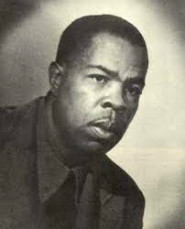
Below is a flyer I made with my Commodore 64 computer and dot matrix printer for Miss Angelou’s appearance.  The quote under her picture is from JAMES BALDWIN, who said that her work “liberates the reader into life simply because Maya Angelou confronts her own life with such a moving wonder, such a luminous dignity.”Flyer for the appearance of Maya Angelou at North Central College

Posted in Black Writers, Diversity & Multiculturalism | Tagged , , , , , , | Leave a comment