
Be-Bop, Re-Bop: Bop

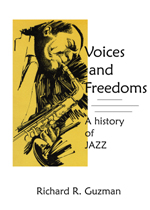
The Video/Audio below is an excerpt from the 10th show of my radio series Voices and Freedoms: A History of Jazz, based on my 1976 book of the same name.  This focuses on one of the greatest revolutions in jazz: the “Bop” music of the 1940’s. The 16-part series played across the nation for five years in the late 70’s/early 80’ and holds its relevance—or is even more so—today than it was back then. The excerpts present about 6 to 10 minutes of the original 30-minute broadcasts. The link above takes you to information about the book and our plans to re-release it and provide access to the full-length original shows. Go HERE for a complete list of shows and links to all excerpts.


John Birks “Dizzy” Gillespie

The early to late 40’s probably saw the greatest revolution in jazz. Many called it “Modern Jazz,” but to most the “new” music was called Be-Bop, or Re-Bop, or just Bop.  Jazz emerged, first, as a music of astonishing complexity, and virtuosity…and speed.  In the musical excerpts I was able to fit in to the excerpt below, you’ll notice the astonishing flurry of notes played by Dizzy Gillespie and Charlie Parker, and in Gillespie’s big band number “Things to Come,” the playing is so fast and volcanic you’ll think the band could blow itself up at any moment.  Along with this musical shift towards speed, complexity, and virtuosity, the very function of jazz began to change.  Charlie Parker in particular was determined that jazz be a music to listen to, to hold up as an art comparable to European concert music in its respectability and seriousness.

Jazz had come so much out of Black musical traditions that were seen as low down.  It had come out of bars.  It was a good time music, something to romance and dance to.  We shouldn’t forget that many people did love to dance to Charlie Parker’s music, and that he loved playing dances and got energy and inspiration from doing so, but he had his sights on supposedly higher things.  It was a bold and dangerous move, something that seemed to add more burden to an already troubled life.  If jazz now began to be seen more as an “art music” than a music serving a whole range of functions, would it survive, would it be cut off from its audience and from many Black musical traditions out of which it had come and which seemed always to provide so much of its vitality and relevance?

Louis Armstrong, one of the brightest lights of “old school” jazz opposed Bop.  Though he and Dizzy Gillespie privately expressed admiration for each other work, Armstrong was reported to have said that Bop was based on malice.  The musicians now, he said, were mainly interested in “cutting,” shaming each other musically, and so producing a music with no melody you can hum, no beat you can dance to, so now there’s less work and everyone is poor again.

In fact, the famous jam sessions organized by Gillespie and Thelonius Monk* at Minton’s in New York City, were sometimes seen as sessions devised to keep no-talent guys out, to overwhelm them with difficult chords, and virtuosity they couldn’t match.

Charlie Parker

The excerpt below takes pains to show that many of Bop’s musical innovations—particularly its growing harmonic complexity and the continuing subdivision of the musical beat—come straight out of musical forces present in jazz from the very beginning, especially in Black musical traditions. I want to emphasize here that this effort to keep no-talent guys out also does.  I have said that what keeps this radio series relevant—perhaps more relevant today than when it was first released—is the degree to which issues of race always shadow my history of this music.  Keeping no-talent guys out is also a vital continuation of the Black effort to keep their music from being stolen, because many of these “no-talent guys” were white.  Now they were faced with a music so complex and fast, they couldn’t just write it down, and it was so full of virtuosity they just couldn’t play it.  There’s a story, perhaps apocryphal, that Miles Davis said a Bop lick that did become generally used and popular had words to it, too, and those words were “white mf’s.”  Every time you hear that lick played by a white band, he supposedly said, you can just smile.  In earlier times—in Ragtime, in imitations of New Orleans jazz—the effort to retain ownership failed so miserably that it often seemed that Blacks were following in the footsteps of the white musicians who had just popularized the music that they—Blacks—had created.  It happened with Bop, too, eventually, but not to the extent it had happened earlier.  It was more successful at keeping Black music Black, but the price may have been too high.  It threatened to cut off jazz once again from the American musical mainstream.  It spawned a counter movement, Cool Jazz, that made it easier for whites to participate in: that is, to steal.

Go to the Diversity Training and Teaching main page, and to a list of these radio show excerpts. *Also, the excerpt below focuses mostly on Dizzy Gillespie and Charlie Parker. Among those mentioned in the full show were these co-creators of Bop: pianist Thelonius Monk (mentioned above), drummers Kenny Clarke and Max Roach, and guitarist Charlie Christian. Of course there were many more.

Posted in Diversity & Multiculturalism, Jazz History, Music & Meaning, Music & Media Podcasts | Tagged , , , , , | Leave a comment

The Jazz Age

The Video/Audio below is an excerpt from the 6th show of my radio series Voices and Freedoms: A History of Jazz, based on my 1976 book of the same name.  This show is about the so-called Jazz Age, which ran roughly from 1919 to 1929. The 16-part series played across the nation for five years in the late 70’s/early 80’ and holds its relevance—or is even more so—today than it was back then. The excerpts present about 6 to 10 minutes of the original 30-minute broadcasts. The link above takes you to information about the book and our plans to re-release it and provide access to the full-length original shows. Go HERE for a complete list of shows and links to all excerpts.


Leon Bismark “Bix” Beiderbecke

The writer F. Scott Fitzgerald defined the so-called Jazz Age as starting roughly with the May Day Riots of 1919 and ending with the great Stock Market Crash of 1929.  The Roaring 20’s, the Age of Flappers, and excess, and a nation reeling from the carnage of WWI and fearful of another World War. So many writers of the time were saying the West was in trouble. Fitzgerald told us that Jay Gatsby’s extravagance was founded “on a fairy’s wing,” and as jazz finally truly entered into the American mainstream it did so partly because white imitators once again stole another product of Black Americans.  In many instances jazz was watered down so much that it, too, seemed founded only on a fairy’s wing.

The Victor Recording Company did offer its first jazz recording to a Black man, Freddy Keppard, but Keppard refused, fearing—rightly, though in an impractical move—that records would make his music easier to steal.  The first jazz recording contract, then, went to the Original Dixieland Jazz Band, though there was little “original” to the band. They were neither as good, or as bad, as some have made them out to be, but fell far short of representing the fullness of jazz.  They pretended to be unschooled and free, but improvised little, if at all. “I don’t know how many pianists we tried,” said coronetist Nick LaRocca, “until we found one who couldn’t read music.” The public went wild and the ODJB’s posturing was one of the forces that started a vogue for “The Negro,” a vogue which saw Blacks as uninhibited, primitive, unschooled…but entertaining.  It was fashionable to have “A Negro” at your parties, or to go up to Harlem to all-white clubs to be entertained by all-black bands.  Even so elegant a personage as Duke Ellington couldn’t break that stereotype.  And while Nick LaRocca and the ODJB gave hardly gave Blacks any credit at all, a much better white jazz band, the New Orleans Rhythm Kings, did. They knew where the music came from and respected that fact.

Joe “King” Oliver

There were other important white bands, like Chicago’s Austin High Gang, who got their first serious taste of jazz from the New Orleans Rhythm Kings, and some white great musicians who appeared: Eddie Condon, Frankie Trumbauer, Gene Krupa, Jimmie McPartland, Red Nichols…. The radiant center, the star of this group had to be Bix Beiderbecke.  I just couldn’t find a good place in the original show to start smoothly talking about Bix, so there’s a kind of confusing jump in the excerpt below.  Suddenly I start to talk about what Louis Armstrong said when he first heard Bix. He said, “There’s a man as serious about music as I am.”  He lacked Armstrong’s bold tone and improvisational flourish.  His style was more laid back.  He was less of a virtuoso but had a beautiful tone and wonderful lyric sense.  The great Lester Young carried a copy of Frankie Trumbauer’s “Singing the Blues” in his sax case, in large part because of Trumbauer’s and Bix’s solos.  Beyond his music, Bix’s life came to symbolize the costs of the 1920’s lifestyle. In poor health, an alcoholic, he died in August 1931 at the age of 29.

The first Black man to record jazz was Joe “King” Oliver, though he was an older man when he first recorded and so we catch only a glimpse of the genius that made him so important to jazz. Not only was he a great musician, he was Louis Armstrong’s mentor, and he played a lead role in the great Northern migration of Blacks when he headed to Chicago.

Gertrude “Ma” Rainey

The excerpt below ends with a nod to Blues singers, all women. Mamie Smith was the first to make a Blues record, an act which started the whole, massive enterprise of Race Records. There was also Bessie Smith, and we end with a moment from Bessie’s mentor, Ma Rainey. Not until Ray Charles’ “I Got a Woman” in 1956 would a “Race Record” cross over into the general American public.  In the 20’s jazz entered the American musical mainstream, but the races and their cultures were still so separate. As Black American soldiers returned from World War I, they too remained largely segregated. Everyone was traumatized by the Great War, but that trauma wasn’t enough to break down racial barriers and injustices.

Go to the Diversity Training and Teaching main page.

Posted in Jazz History, Music & Meaning, Music & Media Podcasts | Tagged , , , , , | Leave a comment

Regression or Revival?

The Video/Audio below is an excerpt from the 12th show of my radio series Voices and Freedoms: A History of Jazz, based on my 1976 book of the same name.  The 16-part series played across the nation for five years in the late 70’s/early 80’ and holds its relevance—or is even more so—today than it was back then. The excerpts present about 6 to 10 minutes of the original 30-minute broadcasts. The link above takes you to information about the book and our plans to re-release it and provide access to the full-length original shows. Go HERE for a complete list of shows and links to all excerpts.


Julian “Cannonball” Adderley

Cool Jazz’s laid back style and muted sonorities took over jazz in the early 50’s…but not for long, though its popularity does last even to this day.  The 12th show in the Voices and Freedoms radio series shows that as Cool Jazz reached its peak of popularity a counter-movement was already taking shape in the form of Hard Bop, Soul Jazz, and Funk Jazz. These brought back a more vigorous, edgy voice to jazz, much of it coming from musicians reaching back into to jazz history even past Louis Armstrong and into blues and, a surprise to some, the music and preaching of the Black church.

While Cool Jazz’s popularity spread quickly, especially among whites, you just have to remember some of the titanic shifts happening in the black community, shifts which couldn’t help but influence the music.  There was, for one thing, the full flown beginnings of the Civil Rights Movement, plus the beginnings of legal change, in particular the 1954 Brown vs. Board of Education decision.  The excerpt below speaks of these changes and of musicians leading another musical revolution: Sonny Rollins and Clifford Brown, Horace Silver and Art Blakey, Charles Mingus, Julian “Cannonball” Adderley.  And I spend some time talking about one of the most important figures in my life, Ray Charles, whose effect on Hard Bop and Soul Jazz has often been underestimated.  The show also features a poem composed and read by Julian Bond, whom I had the privilege of meeting several times. We were both huge Ray Charles fans.

Charles Mingus

But at the time many of the so-called Black Bourgeoisie were not. In fact, they were wary of Charles, whom many saw as a dangerous blues shouter, a throwback to an unsophisticated Black past they were wary of acknowledging.  They saw the move to Hard Bop and Soul as a regression rather than a musical revival. Amiri Baraka and many other Black writers often castigated this Bourgeoisie, this Black middleclass that had supposedly made it, for turning their backs on their own culture in favor of assimilating into whiteness and white society, including Cool Jazz and related movements (like Third Stream Jazz) which sought—in the name of a higher class, more sophisticated music—a way of escape from the blackness from which they came.  James Baldwin would call this “the price of the ticket,” the price of entrance into acceptable, white society. The cost, he said, was nothing less than the annulment of your own identity.  But the currents flowing throughout this American musical and social sea change were complex. Some proponents of Soul Jazz saw in it merely an escape into good times, and while the Black church ultimately fueled so much of the Civil Rights Movement, we must remember that all of it didn’t initially support that Movement, counseling the gradualist, go-slow approach adopted by so many white churches.

Since Ray Charles figures so prominently in this Voices and Freedoms episode, check out my five-part Video Lecture Series called “Me and Brother Ray,” which focuses on his life and work.
Go to the Diversity Training and Teaching main page.

Posted in Jazz History, Music & Meaning, Music & Media Podcasts | Tagged , , , , | Leave a comment