The event described below is part of a series of initiatives of the Anti-Racism Taskforce of the Northern Illinois Conference of the United Methodist Church. See below for details.
The color of concert music is white. Its gender: male. So goes the popular perception. To start a conversation on t.....continued>
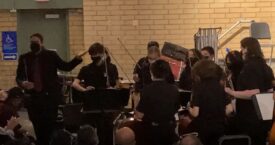
Below is a 3:30-minute video of a small but momentous occasion. My son Aaron—a wonderful musician and talented teacher and conductor—leading the Gage Middle School orchestra, Riverside, California. He’s been teaching there for 20 years and thousands of students. When he first got to Ri.....continued>
We celebrate the Church’s “birth” on Pentecost Sunday, the day the promised Holy Spirit arrived. This year we celebrated on May 20th, a Sunday where at my church—one of the most diverse in America—its large Filipino group took charge of the service. The VIDEO below sh.....continued>
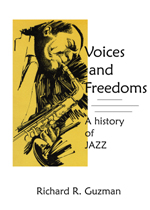
This is the first of 16 short excerpts from my radio series Voices and Freedoms: A History of Jazz. Based on my book of the same name, the series (and book) were produced at the University of Virginia in the nation’s Bicentennial Year. The show, syndicated by the Intercollegiate Broadcasting.....continued>
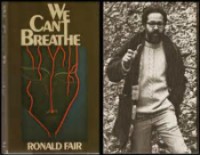
May 2020 Update: Another “I-Can’t-Breathe” incident. I could not watch the video of the police killing of George Floyd in Minneapolis on May 26, 2020. But I heard it while my wife described to me what she was seeing: a police man with his knee on the neck of an already-subdued bl.....continued>
“CBS” (COOL BLACK SICKNESS) a song DAN GUZMAN co-wrote and performs with Brad Hoskins. Fat Cats, Moses in the desert with the Great I Am, bleeding seas, and things tumbling from the sky. Apocalyptic dread. Cool grooves. It not only sounds good—it&#.....continued>
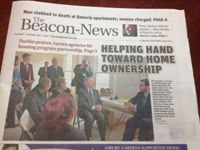
Update: IN APRIL 2018, EMMANUEL HOUSE MERGED WITH LONG-TIME PARTNER ORGANIZATION THE JOSEPH CORPORATION TO BECOME The Neighbor Project. THIS INCREASED THE NUMBER OF FAMILIES SERVED FROM AROUND 25 AT THE TIME OF SENATOR DURBIN’S VISIT TO NOW, IN 2020, A NUMBER APPROACHING 3000. WATCH A VIDEO.....continued>
In early May 2024, Vana Liya did her first Midwest shows. Leaving Philly on May 1st, she and the band—which includes my son Daniel on guitar—played Indianapolis on the 2nd, Chicago on the 3rd, Milwaukee on the 4th, and St. Paul on the 5th. Life on the road. Martin Scorcese’s film on The Band’s farewell concerts, The Last Waltz, came back again and again to the difficulties of being on the move so constantly. At least every city’s name can become part of a song’s lyric. The 8-minute video below shows highlights of the Chicago and Milwaukee shows, which we were able to catch on the 3rd and 4th. It features some songs not captured on other videos I’ve posted, particularly “Vana Liya: We’ve Got A Brand New Dance.” Like a brand new sing-a-long on Creedence’s “Have You Ever Seen the Rain,” where in Chicago Vana sings, “I wanna know, Have you ever seen the rain / Coming down on a Chicago day.” Next night it was, Have you ever seen the rain / Coming down on a Milwaukee day.”
There’s also a few seconds of Vana’s “My Island Heart” and “Come Away,” and two others that are on “We’ve Got a Brand New Dance,” but they’ve been transformed so they almost seemed like new. On her signature song, “Gold,” Derek (aka Man of the Forests) and Daniel do a beautiful violin/guitar duet, with Daniel and Vana signaling Derek to join Daniel center stage. Then there’s Vana’s “Feelin’ Good” that’s been turned into a vehicle to feature drummer Logan Tyler! That was the evening’s biggest surprise in Chicago, and it works so well. “It’s our basic show we’ve been working on for a long time,” said Daniel. You take it on the road, see how it goes, see it evolve audience by audience, city by city by city.
A sad update: On Monday, July 1st, we learned of the sudden passing of drummer Logan Tyler, “the evening’s biggest surprise in Chicago.” Logan and Daniel were close. He was the drummer for Daniel’s former group, Light the Band, and brought Daniel over from that group into Vana Liya’s. As of today (July 3rd), I’ve received no definite cause of death. Our deep condolences to Logan’s family. He was a wonderful musician and friend.
♦ Go Here for more music from Dan Guzman, including more with Vana Liya and others.
On May 18, 2024, the committee I chair met for the second time with a few youth leaders from the Northern Illinois Conference of the United Methodist Church. The committee had developed the conference’s anti-racism workshop “Becoming the Beloved Community: How to Talk About Race in America,” and this was a follow-up to the first meeting a month earlier, both organized by the conference group DAY: Discipling Anti-Racist Youth. In that first meeting we spent most of the time getting to know one another in hopes that this would lead to forming a community of youth leaders concerned about racism and how to lead youth towards a life of anti-racism. We spoke very little about racism issues directly, however, which we did much more of in our second meeting.
But we began this second meeting again stressing the importance of community, of being together in the fight against racism. That was as important as gaining a deep knowledge of the presence and workings of racism itself. Afterall, our workshop was called “Becoming the Beloved Community,” so we stayed with that theme as we began. The term comes from the philosopher Josiah Royce but was popularized by Martin Luther King, Jr., for whom The Beloved Community was perhaps the key element in his thinking, something most people don’t realize. That seems like heady stuff for youth…but not necessarily. Our first suggestion in engaging youth in a discussion that might open the door to deepen their awareness and understanding of racism was to ask, What’s your “community” like?—as well as important variations on that theme. How do you get in (or thrown out) of your community (your group of freinds, your clique)? How big is your community and who is not in it? What would be your ideal community? Do you feel Beloved in your community? This last one is perhaps the most important of all, but must be handled carefully.
Below, in newest to oldest order, are suggestions and comments from those who were at the workshops. What have you all been thinking? What have you tried and how did it work? This is a modest way we’ll try to keep this community of youth leaders going, and hopefully deepening and growing.
The event described below is part of a series of initiatives of the Anti-Racism Taskforce of the Northern Illinois Conference of the United Methodist Church. See below for details.
The color of concert music is white. Its gender: male. So goes the popular perception. To start a conversation on the nature of exclusion, I would often ask my students if they could name a woman composer of “classical,” concert, or symphonic music. Over decades of asking I only ever got one answer: Clara Schumann, Robert Schumann’s sister. What could this mean? I asked—That women are simply incapable of writing concert music? The same could be said of blacks in classical, symphonic, or concert music. Are they, too, incapable or have they been kept out my multiple systems of exclusion? The answer is the latter. Against all odds, however, they’ve been involved in formal concert music for centuries. The Video below combines two videos: first, a short explanation of the Gateways Music Festival; second an excerpt from Symphony #3 in C minor, by Florence Price, who is both a woman and black.
The Gateways Music Festival started in 1995 in St. Louis, with the goal of bringing together black, professional, classical musicians from around the country to form various ensembles, including a full orchestra, and to educate and transform public perceptions through the power of performance. In mid-April of this year, we were at Chicago’s iconic Symphony Center, home of the Chicago Symphony, to hear the Gateways Festival Orchestra. As Andrew Laing, principal clarinetist of the Phoenix Symphony says in the video below, “The Gateways Festival Orchestra opens a line of enquiry with the audience even before we’ve played a single note.” The orchestra is all black. It may also be the finest orchestra I have ever heard, even including—though I border on heresy here—the Chicago Symphony itself.
That evening the Gateways Festival Orchestra played Worship: A Concert Overture by Coleridge-Taylor Perkinson, named after one of the earliest black composers to gain considerable fame: Samuel Coleridge-Taylor (not to be confused with the poet Samuel Taylor Coleridge). The person who championed Coleridge-Taylor was Edward Elgar, the famous, white English composer, so Elgar’s Enigma Variations, was on the program, followed by Margaret Bonds’ Montgomery Variations. To close out the concert, the great a cappella group Take 6 took the stage doing several numbers on their own and several backed by the full orchestra as well.
The orchestra’s current conductor, the seemingly ever-present Anthony Parnther, spoke of Chicago’s central place in black concert music. In the video below you’ll see Michael Morgan conducting the Gateways Festival Orchestra, and it was his appointment, by Georg Solti, as assistant conductor of the Chicago Symphony Orchestra that made Morgan the most visible black conductor in the United States. Coleridge-Taylor Perkinson also spent significant time in Chicago, perhaps most notably when he was appointed artistic director of the performance program at the Center for Black Music Research at Columbia College Chicago. Florence Price composed her most significant pieces in Chicago after moving there from Little Rock and becoming an important figure in the Black Chicago Renaissance. She lived for a while with her good friend Margaret Bonds, whose Montgomery Variations graced the program we saw at Symphony Center. In 1932 the two Chicagoans, Price and Bonds, gained national recognition when they came in first and second in the Wannamaker Prize for Composition. On June 15, 1933, the Chicago Symphony premiered Price’s Symphony #1, making her the first black woman, and one of the first women regardless of race, to have a composition played by a major American orchestra. One critic called the symphony, “a faultless work, a work that speaks its own message with restraint and yet with passion…worthy of a place in the regular symphonic repertoire.” “So…” said Anthony Parnther, “playing in Chicago tonight is a kind of homecoming.”
Towards the end of the first video I excerpted below, Paul Burgett, Chair of the Board of the Gateways Music Festival, and Vice President and senior advisor to the President of Rochester University, says, “I personally struggle, and always have, with a sense of hopelessness about race in America. But when I see [the Gateways Festival Orchestra] on that stage, I think, Maybe…Just maybe. It feels really good to see those people on stage and it eases my sense of hopelessness.” The beauty we witnessed that night on the Symphony Center stage is both all we need to behold without further commentary, but also yet another testament to overcoming great odds with bold, shining excellence.
♦ This event is part of the Northern Illinois Conference Presents series, now in its third year. For more details go to: Art and Culture Series (2024), Film Series (2023), Speakers Series (2022). For the first event of the Film Series I did an introductory talk at the Illinois Holocaust Museum on racism and images of blacks in films. Watch this Here or on the Film Series link above. For the final event of the Speakers Series I interviewed Chabon Kernell, executive director of the Native American Comprehensive Plan of the United Methodist Church. Watch this live-streamed interview at the Speakers Series link above.


 and again to the difficulties of being on the move so constantly. At least every city’s name can become part of a song’s lyric. The 8-minute video below shows highlights of the Chicago and Milwaukee shows, which we were able to catch on the 3rd and 4th. It features some songs not captured on other videos I’ve posted, particularly “Vana Liya: We’ve Got A Brand New Dance.” Like a brand new sing-a-long on Creedence’s “Have You Ever Seen the Rain,” where in Chicago Vana sings, “I wanna know, Have you ever seen the rain / Coming down on a Chicago day.” Next night it was, Have you ever seen the rain / Coming down on a Milwaukee day.”
 There’s also a few seconds of Vana’s “My Island Heart” and “Come Away,” and two others that are on “We’ve Got a Brand New Dance,” but they’ve been transformed so they almost seemed like new. On her signature song, “Gold,” Derek (aka Man of the Forests) and Daniel do a beautiful violin/guitar duet, with Daniel and Vana signaling Derek to join Daniel center stage. Then there’s Vana’s “Feelin’ Good” that’s been turned into a vehicle to feature drummer Logan Tyler! That was the evening’s biggest surprise in Chicago, and it works so well. “It’s our basic show we’ve been working on for a long time,” said Daniel. You take it on the road, see how it goes, see it evolve audience by audience, city by city by city.


