
Students “Write” Race and Diversity

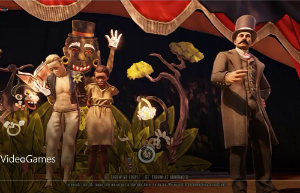
Still from "Race and Video Games" project

Still from “Race and Video Games” project

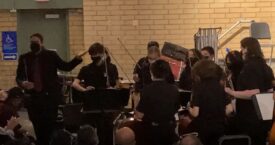
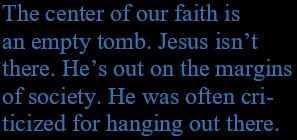
This post indexes several student projects on race and diversity I’ll feature on this site, partly as examples to other students about what their peers have done…and what they could do, too.  Of the first three below, two came from my English 315 – Advanced Writing class, and the third from a group of students wanting to make diversity an important issue in a first-year intro-to-college class required of all new students at North Central College.

What’s “advanced” about Advanced Writing is the audience students they aim for.  They don’t write more “advanced” research papers because, by-and-large, only their college professors read them.  How do you reach a broader audience?  It’s not that you don’t do solid research, but that research is often embedded in stories, our own or someone else’s. Then there’s the medium, which—these days—seems to involve videos and podcasts more and more.  It’s “writing” that teaches and entertains, entertains to teach, is designed to entertain and teach.

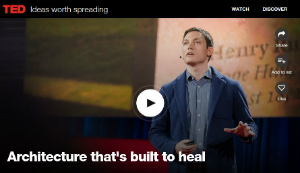
Architect-Heal“Design” brings us to the popular TED talks: “TED” = Technology, Education, Design.  “If you want to know what I’m after,” I tell my students, “watch my favorite TED talk over and over and over again, absorbing its flow, its meaning and spirit.”  It’s architect Michael Murphy’s “Architecture That’s Built to Heal.”  He begins with a personal story—circling back to it at the end—about how working on a house helped heal his father.  In between he teaches us about what he calls “Lo-Fab” architecture, something he developed while building hospitals that actually heal people instead of making them sicker.  And the story has a profound arc.  It begins with how architecture can heal our bodies, and ends, just before he returns to his father’s story, about how it can help heal our spirit—not just of an individual like his father, but of a whole nation like ours.  Which brings us back to race.  What, among many things, does our nation need to heal from—need to actively seek out healing for?  Lynchings, for one.  I have often said that Americans would rather talk about anything—anything—but race, and the tragic history of lynching, the horror and shame of this, is one thing that keeps us silent, or talking at each other, not with each other.  One of Murphy’s architectural projects—a project done for Civil Rights lawyer Bryan Stevenson, whose story is told in the movie Just Mercy—intends to heal this deep wound. You can watch his TED talk over and over HERE, and enjoy student work on race and diversity at the links below.

Note: Some of the work below uses software students find and use on a trial basis, thus, for example, the water mark on Asma Al-Oldaina’s video below, which also features part of a TED talk.

Go to the Teaching Diversity main page.

Posted in Social Change | Tagged , , , | Leave a comment

Notes on Space and Growth

Apples1

This article is part of a series on The Arts of the Essay.

____________

Bonnie Rough’s “Notes on the Space We Take” may be my students’ all-time favorite essay. (You can read it HERE.)  A term later, a year later, they all remember.  “Yes, that essay, about the hermit crabs, and RV’s, and fish tanks. I loved it! It was so random”—this last phrase being one I’ve often heard applied to friends: “I love him. He’s so random.”

This commentary on her “Notes” is the first of several pieces I’m writing on The Arts of the Essay, and in the series’ lead post (see link below) this feeling of randomness—like the randomness of a wonderful conversation with a friend—is one of the main features I note about many great essays. That random-feeling surface, however, often co-exists with an underlying structure that’s fairly tight, a structure often not apparent, but once you notice it you realize why the essay is so great, why it stays with you so long.  The tension between the sometimes loosey-goosey surface and the stricter structure beneath is one of the things which gives the essay substance.

HermitCrab1Bonnie Rough’s essay begins with this sentence: “The womb is the smallest place in which a human being may live.”  It then proceeds to talk about babies weighing between 7-8 pounds—“about the same as a gallon of milk”—and by the end of this first section we’ve talked about Buster Keaton, “a world-record setting paddle fish caught in Montana in 1973,” the height of a newborn giraffe, before in the next section she talks about hermit crabs, then RV’s, then how NASA uses apples to illustrate how much usable land we have—with a side note on the Biltmore Estate, America’s largest home—then how to calculate how many fish you can safely put in a fish tank, freak shows featuring tiny people, hairy people, legless people, albinos, before she ends talking about claustrophobia.  It’s wonderfully interesting—and seemingly random, until you catch her last two sentences, and you hear an eerie echo of the essay’s very first one: “The tiniest coffin available is made for premature infant deaths. It is 10 inches long and 5 inches wide.”  These send you back to look for deeper structure…and you find it.

RV1Bonnie Rough divides “Notes on the Space We Take” into eight sections which mirror each other.  Section 1 clusters notes about the space we take up at birth, which mirrors Section 8, which clusters notes about the space we take up at death.  Section 2, about hermit crabs, finds its mirror in Section 7, where she talks a lot about small people.  Section 3, about RV’s not only finds a mirror image in Section 6, a section titled “The urge to migrate is deeply rooted in human ancestry,” but also ties back to hermit crabs, who not only migrate from home to home, but, if you think about it a second, their shells also resemble RV’s.  In Section 4 she explains how NASA uses the metaphor of slowly eating and peeling away an apple to illustrate how much arable land earth contains.  Turns out it’s just the skin of 1/8th of the apple. Turns out, in the next section, Section 5, that how we usually calculate how many fish can fit in a tank—one gallon per inch of fish—is pretty useless.  So she provides formulas she got from three scientists, one of which is for “peaceful fish:” L (length of tank) = FL (maximum expected fish length) x 4.

FishTank1The essay’s center sections, 4 and 5, not only mirror each other, but also tell us something that reverberates throughout the entire piece: between birth and death we really have very little space to live in and grow on, but if we calculate realistically we can get in as much life and growth as possible.  How? Migrate.  Get out in the world, see things, travel through as much space as you have.  Don’t let your “homes”—your routines, the normal way you see things—pin you in.  The Biltmore Estate, large as it is, isn’t big enough for the human spirit.  If you think it is, you’re prematurely dead.  True, it’s a pretty big coffin, but a coffin nonetheless.

 Go to the Lead Post in the series The Arts of the Essay.

Posted in Writing | Tagged , , | Leave a comment

The Arts of the Essay

This is the lead post in a series on The Arts of the Essay, a list of series items appearing below, beginning with thoughts on Bonnie Rough’s essay “Notes on the Space We Take Up.”

“Oh, yes, THAT essay,” said Zach Murphy, “Best one ever!”  One of my favorite students, Zach—besides being a very good writer—is also a very good magician, so, since transformations and appearance/reality were a big theme in a recent class he was in, I figured, Why not begin each session with one of his card tricks? You think a card is here but it’s there. You think it’s the Jack of Hearts but it’s really the Queen.  All fabulous, I thought, an alchemy that’s always thrilled me even though I know it’s a trick and involves misdirection.

5-Pgraph

I think of Murphy now because in this series I want to talk about the alchemy of a great essay, which in many cases involves misdirection.  The alchemy happens between what often appears like a random surface, a surface which seems rambling, illusive, full of crazy jumps.  But that surface often co-exists with—is in creative tension with—an underlying structure that’s often surprisingly symmetrical, sometimes even linear.

Linearity is king, I suppose, and clarity, too, and one way we’ve evolved to instill these traits is the Five-Paragraph Theme, parodied in Boynton’s famous cartoon—though I’m not necessarily embarking on a diatribe against the form.  Students do need straightening out…sometimes.  They need to be able to stick to the point…sometimes.  And if I had to grade as many essays as those gallant teachers had to grade, I’d adopt some form I could scan quickly and understand quickly too.

Race-LinearHowever, you don’t read most great essays quickly, and they often do not present an apparent, clear thesis about a topic—at least not at first. They circle a topic, probe it, weigh it, attempt some something with it—all things consistent with the etymology of the word “essay,” from the Latin and French exagium (the act of weighing: but notice it’s the act, not necessarily the exact weight itself), or the infinitive essayer (to “try” or “attempt”).

As in many things, especially in the U.S., there’s also a racial component to why we gravitate towards the linear, the “clear.”  In her provocative book Other People’s Children, Lisa Delpit remarks on research which found that “…there was a tendency among young white children to tell ‘topic-centered’ narratives—stories focused on one event—and a tendency among black youngsters, especially girls, to tell ‘episodic’ narratives—stories that include shifting scenes and are typically longer.”  They were full of associations and were non-linear, something that bothered all white adults responding to the stories, but not black adults.  And who usually hands out the grades?

Language2So we could say that whiteness gravitates towards the Five-Paragraph Theme, the linear outline, the check list, the grading rubric, but race is only one aspect of it.  Many of the writers I write about in this series are white, after all.   Perhaps the larger issue is language itself, in whose very foundation is buried an intractable ambiguity, even a kind of wander lust.  A semiotician, one who studies the nature of signs, would say we think there’s a solid, natural connection between a sign and the thing it signifies.  But there isn’t.  There’s always a meaning gap, a failure of the sign to communicate completely; and what it does communicate is largely a cultural construction.  Nothing natural about it.  In reality all signs float, they travel here and there, meaning this and that.  A great writer, a great essay, taps into the power of this ambiguity, this wandering trait in all language. “The great thing about human language,” said the noted essayist and doctor Lewis Thomas, “is that it prevents us from sticking to the matter at hand.”  That’s how new things are discovered, new things said.

There’s also a kind of randomness in a great essay, one that mirrors most of the conversations we have with our friends. True, I do have a friend who sometimes calls up, saying, “Richard, I’d like to discuss three things with you. One…Two…Three,” but that’s unusual.  Usually our friend conversations drift, and circle, and shift.  “I just love him.  He’s so random!”  I’ve heard many, many people say.  That’s one reason almost every student—not just Zach Murphy—in every class I use it loves that Bonnie Rough essay the most. It’s so random, and yet, underneath, so structured. What’s the underlying structure that holds random, rambling friend conversations together?  It’s, well, friendship.  One usually develops historically, even linearly—it starts at one point—but it grows and deepens through drifts, and circles, and shifts.

Posted in Writing | Tagged , | Leave a comment